Blog

My Internship with Floris Books

April 29th, 2015 by Callum Mitchell Walker | Posted in Blog | Comments Off on My Internship with Floris Books
Tags: , , , , ,

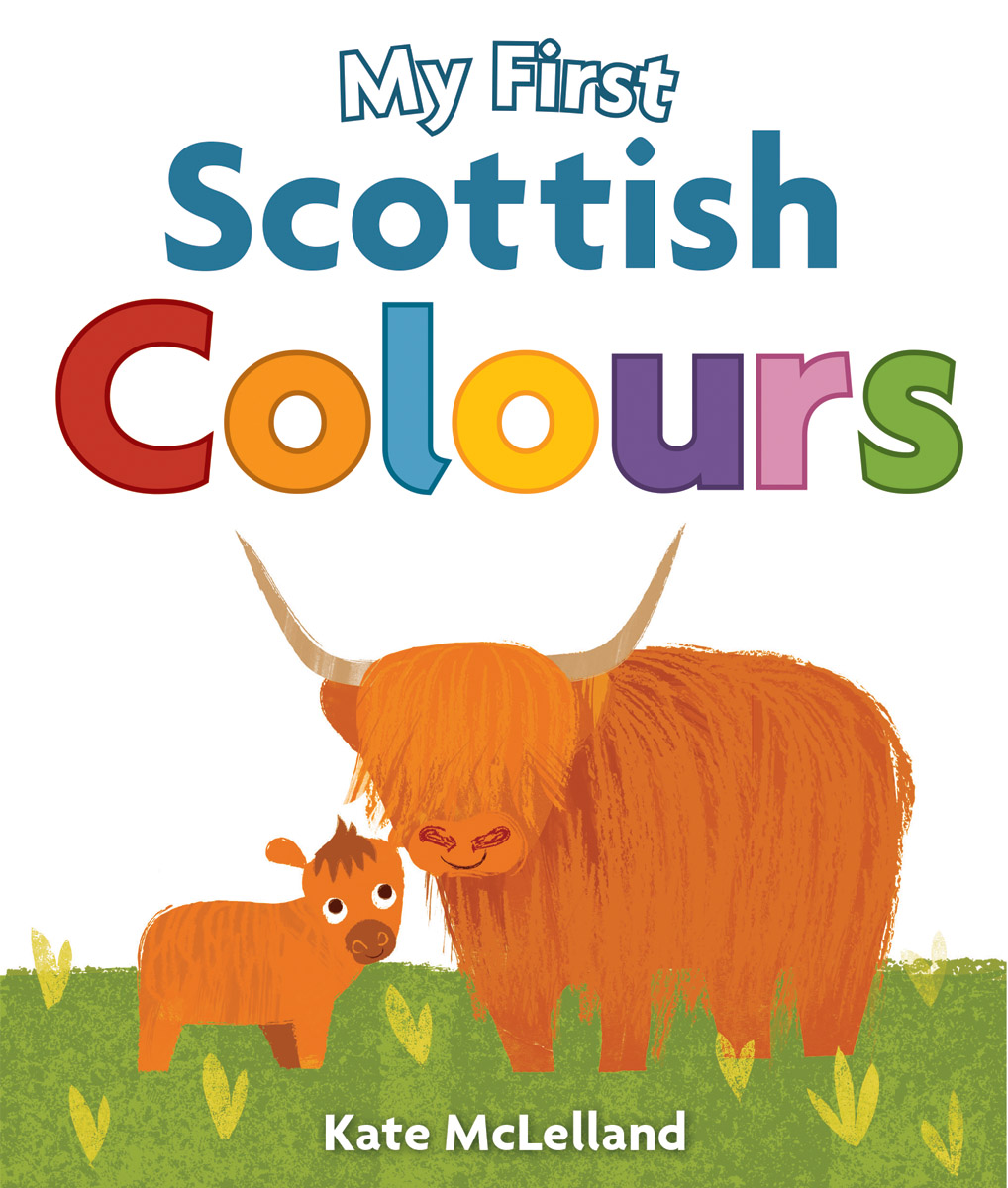
9781782501824In February of this year I began a  4-month internship with Edinburgh based children’s and non-fiction publisher Floris Books and have greatly benefitted from this experience by enhancing my classroom learning in a professional environment. Mainly focused in the marketing department, I learned valuable new skills and was able to improve the abilities I had prior to my time interning. Although most of my tasks were marketing focused, one benefit of Floris being a small publisher is that I was given the opportunity to work on a wide range of tasks across other departments too and develop a greater understanding of the ways in which departments work together to optimize the effective running of company procedures.

Although Floris are a small Scottish publisher, they publish a wide range of non-fiction titles in areas such as biodynamics and holistic health as well as their popular children’s books. I was able to work on many projects across the different lists published by Floris and enjoyed working on marketing different books to different groups of readers.

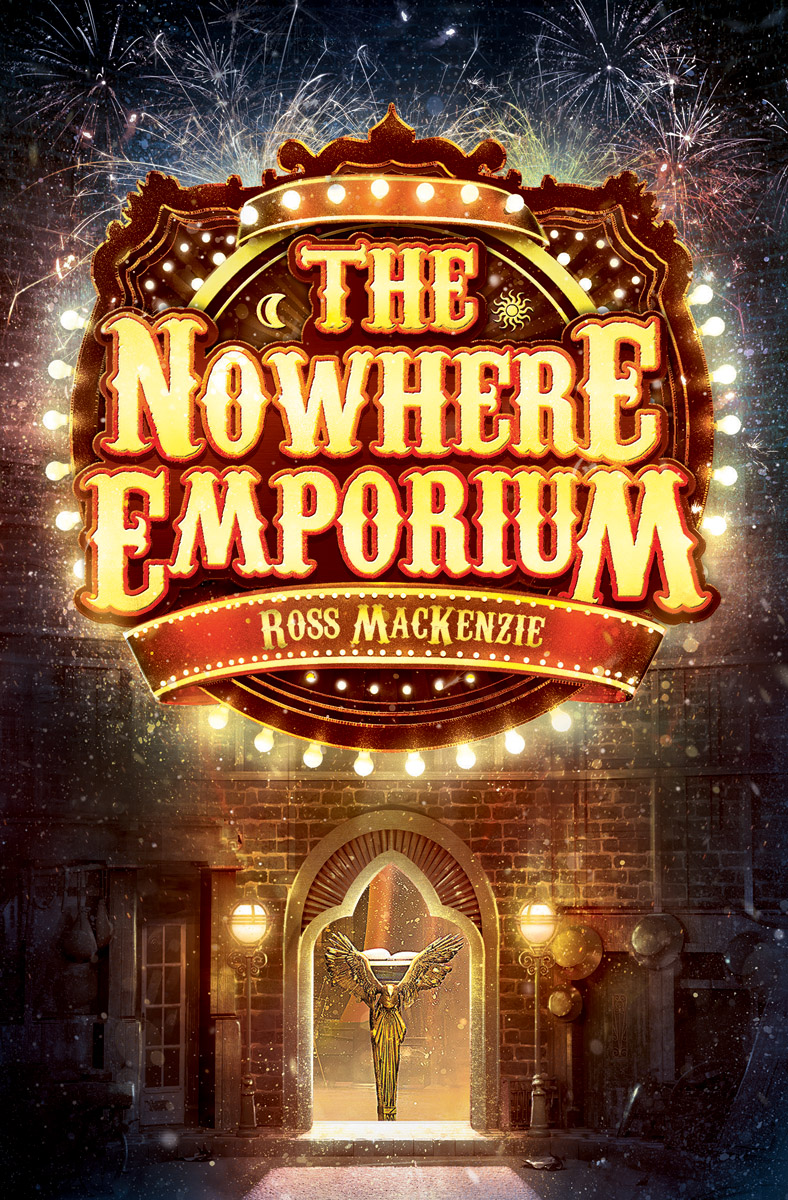
9781782501251-3At the start of my internship I was warmly welcomed by the lovely Floris team and was introduced to the extensive Floris tea collection that I was encouraged to enjoy as often as I liked, before getting straight down to work. Throughout my internship I was able to work on a wide variety of tasks for the marketing department including writing press releases, drafting advance information sheets and designing promotional materials for events. I was unaware before my internship how often I would be utilizing my InDesign abilities in creating marketing materials and my first few weeks interning encouraged me too really practice these skills. However my tasks were not restricted to marketing, as I gained valuable editorial experience proofreading content and reading and reporting on submissions for the Floris annual Kelpies Prize, which encourages Scottish writing for children. I also helped assist the Floris team at the awards ceremony for the Kelpies Design and Illustration Prize, which awarded designers and illustrators who reimaged the cover of a classic children’s book in the Kelpies range of Scottish children’s fiction.

I’m very grateful for my time spent at Floris as I have received support, guidance and feedback from such a dynamic company. I have learned many essential skills that will benefit me in my future career from a fantastic, passionate small team. My internship has given me much more confidence in my abilities and has encouraged me to work on other skills to improve my employability when looking for my first job in the publishing industry. This experience has been completely invaluable to me by providing me with a hands-on approach to publishing practices and helped me to feel more enthusiastic than ever before about my future endeavours.

Interning with Think Publishing

April 29th, 2015 by Leia Forster | Posted in Blog | Comments Off on Interning with Think Publishing
Tags: , , , , , , , , , ,

think logoIn January 2015, I began to intern with the award-winning content and publishing agency Think. Founded in 1999, Think Publishing employs more than 60 members of staff, work with over 40 clients and have offices in London and Glasgow. I was lucky enough to work in the editorial department of the Glasgow branch which produces a number of great magazines for a variety of organisations.

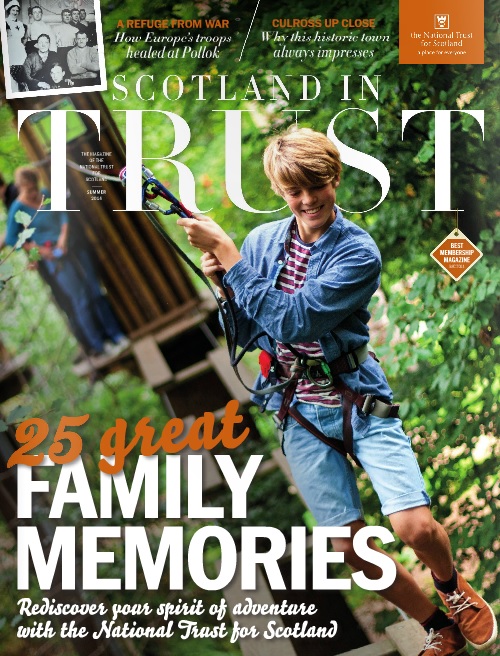
During my time at Think I believe I learned a great deal about magazine publishing as well as gaining insight into the workings of an office environment. I quickly found that the inner workings of a magazine publisher were quite different to that of a book publisher. On my first day I was presented with strange magazine terminology such as ‘furniture’ and ‘copy’, but I caught on quickly. I found myself intrigued by what could be considered a somewhat unconventional business model in the realms of publishing – client funded publications. Trade fiction publishers essentially gamble with every publication they choose to publish. They invest money in these publications and rely greatly on their commercial success. Think’s business model provides a secure financial platform to support the publications that they print for their clients.            scotland in trust

While I was at Think I worked on a number of magazines such as Scotland in Trust, Historic Scotland, Escape, Splash and Legion Scotland. Tasks included the transcription of interviews, research for features, writing content for magazines, sourcing images and coming up with ideas for future features. I found that there were far more opportunities to undertake creative tasks than could be expected in typical book publishing editorial roles, and one of the most rewarding parts of the internship was being able to produce a piece of copy and watch it progress through different stages before finally being included in the magazine.

Despite working primarily on editorial tasks, Think’s office environment allowed me insight into all the different roles and tasks involved in the creation of a magazine. The open layout of the office meant that I could look across the room and watch the designers working on magazine covers and spreads. Being able to observe staff interactions and listen to office discussions was very useful and my time spent doing feature research was never wasted as I found myself leaving the office on a daily basis with a new selection of random facts and knowledge.

I am very thankful to have had the opportunity to intern with Think, and this insight into the world of magazine publishing has given me the confidence to consider magazine publishing as a potential career path to follow upon completing the course.


Publishing Prizes 2013-14

April 12th, 2015 by cs48@stir.ac.uk | Posted in Blog | Comments Off on Publishing Prizes 2013-14
Tags: , , , , , , , , ,

The Stirling Centre for International Publishing and Communication at the University of Stirling is delighted to have made the following awards to students who graduated from the MLitt in Publishing Studies 2013-14.

  • The Freight Books Prize for Publishing Design – Laura Jones
  • The Faber & Faber Prize for Digital Innovation – Liam Crouse
  • The Publishing Scotland Prize for the Best Dissertation – Fanny Schmidt
  • The Routledge Prize for the most Distinguished Student on the MLitt in Publishing Studies – Laura Jones

All the prizes are sponsored by members of the Centre’s Industry Advisory Board.

Laura Jones's prize-winning Read. Write. Ink.

Laura Jones’s prize-winning Read. Write. Ink.

Laura Jones is the recipient of both the Freight Books Prize for Publishing Design. For this former, she produced the fascinating design project Read. Write. Ink., focusing on collectors of literary tattoos. It features writers close at home including Vicki Jarrett, but also examples she sourced via Twitter. For this, Laura wins £100 of cash and £100 of books of her choice from Glasgow-based publisher Freight Books. Fellow student Aija Oksman was Highly Commended in the Freight Books Prize for Publishing Design for her powerful project Pursuit: Empowering Post-Natal Depression.

Laura is also the winner of the Routledge Prize for the most Distinguished Student on the MLitt in Publishing Studies, thus winning £200 of books from Taylor & Francis. Laura’s overall grade profile on the course was consistently high, and alongside her Publishing Project she produced extremely strong work including the dissertation, ‘Amazon: Friend or Foe?’. Laura is now working at Glasgow publisher Saraband Books.

Fanny Schmidt’s prize-winning dissertation, for which she will receive £100 of books of her choice from Publishing Scotland’s BooksFromScotland.com, is titled ‘Copyright, Books and Social Media’. The dissertation, as tis abstract explains, ‘examines the interrelation between copyright and authorship on social media platforms, arguing that that it should be awarded with both a fair dealing exemption for the use of copyrighted material in those spaces and also a better protection of the copyright of original material produced for social media. It further examines whether or not social media content should be awarded authorship status in order to support the claim for copyright. However, the findings suggest that due to the high level of prosumption on social media, authorship in the traditional sense cannot be granted; calling into question the copyright legislation these websites should receive.’ A pdf of Fanny’s dissertation is available via this link. Fanny is now working at Bloomsbury Academic.

Liam Crouse is the winner of the Faber & Faber Prize for Digital Innovation, for his work developing the concept of and designs for a geospacial app mapping out the life of the celebrated Gaelic poet Duncan Bàn MacIntyre along the West Highland Way. Liam was the recipient of the inaugural Gaelic Books Council Scholarship at the Stirling Centre for International Publishing & Communication. His aware consists of a two-day placement with Faber & Faber in London, during which he will have the opportunity to meet with the heads of Faber Digital, Faber Factory, and the marketing team. A previous recipient of the award, Claire Jeffery, writes about her experience here.

Liam Crouse's prize-winning app The Duncan Ban Trail

Liam Crouse’s prize-winning app The Duncan Ban Trail

Professor Claire Squires, Director of the Stirling Centre for International Publishing and Communication, commented that ‘It’s a great validation of our MLitt in Publishing Studies to have these industry-sponsored prizes, which showcase the work of the Centre and its students. We congratulate the individual students on their creativity, knowledge, skills and understanding of the publishing industry, and are particularly delighted to be able to have prize-winning work which celebrate digital savvy and entrepreneurialism – key attributes for the publishers of the future.’

My Internship with Glasgow Women’s Library

April 8th, 2015 by Kena Nicole Longabaugh | Posted in Blog | Comments Off on My Internship with Glasgow Women’s Library
Tags: , , , , ,


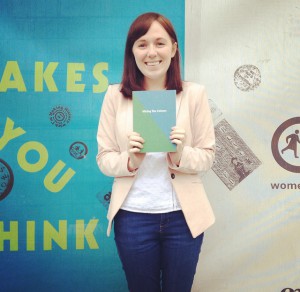
photo 3In November of last year, I began a publishing internship with Glasgow Women’s Library. Located in Glasgow’s East End, GWL acts as a lending library, historical archive and provider of services and programmes for women across Scotland. The mission of the library is ‘to celebrate the lives and achievements of women, champion their historical, cultural and political contributions and act as a catalyst to eradicate the gender gap that contributes to widespread inequalities in Scotland’. Unique as the only women’s library in Scotland, GWL aims to provide a welcoming and productive space for women from all walks of life; a warm smile and offer of tea is almost guaranteed when you walk through the doors.

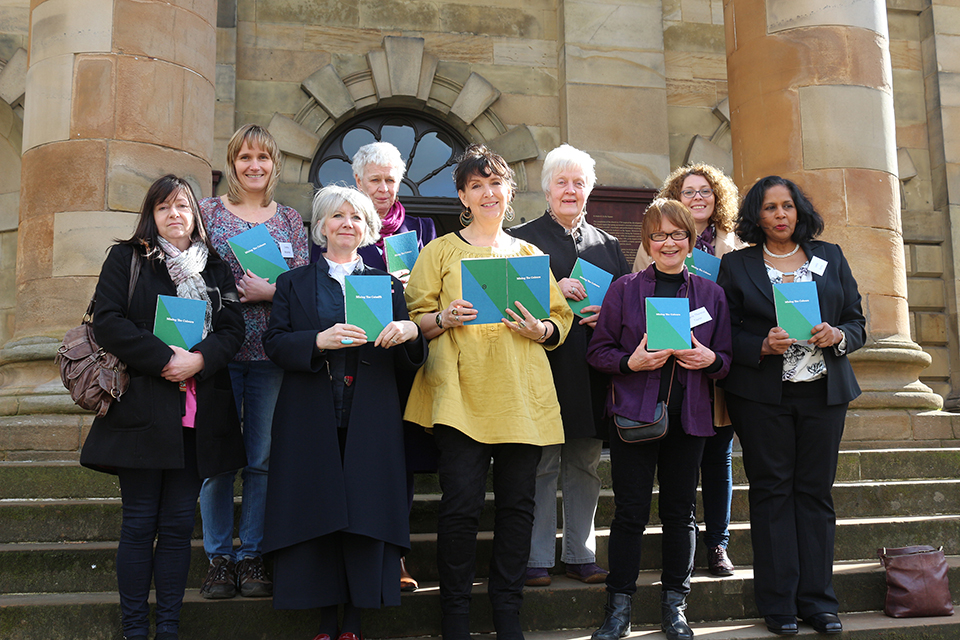
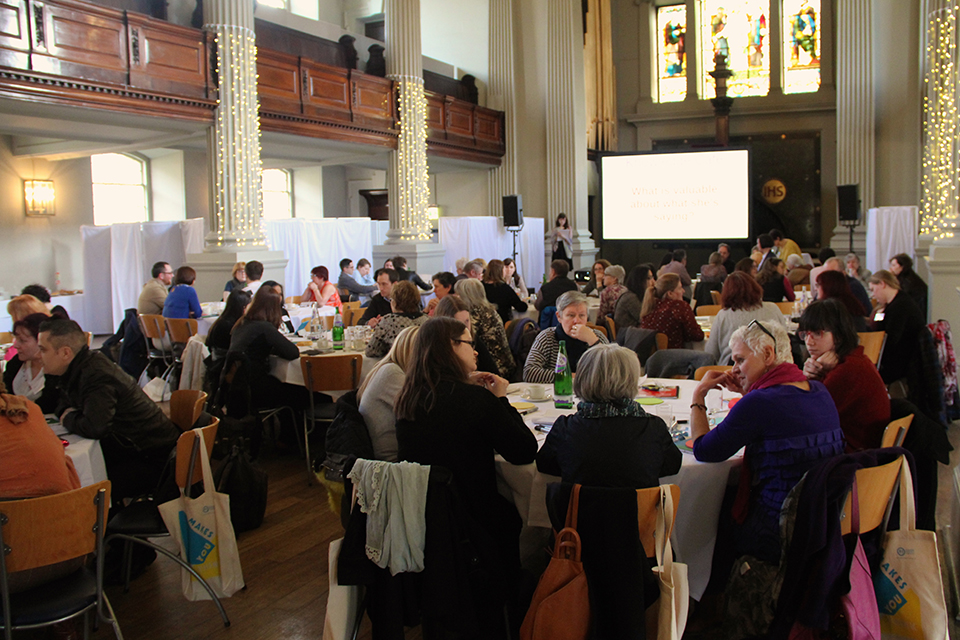
My role at the library was to provide publishing related support for a book titled Mixing The Colours: women speaking about sectarianism, an anthology of short stories and poems about women’s experiences with sectarianism in Scotland. More than sixteen writers contributed to the book, including commissioned authors Eleanor Thom, Denise Mina and Magi Gibson. The short stories and poems contained within the publication were collected through a series of creative writing workshops and discussions where women were encouraged to draw on experiences of sectarianism in their lives. The result is a moving narrative that is truly unique: Mixing The Colours: women speaking about sectarianism is the first ever published work written by and about women on the issue of sectarianism. The book was launched with a conference on 20th March that included performances by the contributing writers, discussions and a screening of the accompanying film of the same name. The entire project was spearheaded by the wonderful Rachel Thain-Gray, my internship mentor and the Project Development Worker for Mixing The Colours.

The authors of Mixing The Colours: women speaking about sectarianism

Several of the authors of Mixing The Colours: women speaking about sectarianism posing with the book.

During my time at the library, I worked on various editorial and marketing tasks for the Mixing The Colours publication. These included proofreading the manuscript, contacting book festivals, researching, designing an Advance Information sheet and copyright page, writing a press release and sending it to media outlets, blogging and planning for the conference.

The Mixing The Colours conference at St. Andrew’s in the Square in Glasgow.

I’m grateful to have been trusted with so much responsibility throughout my time at the library and for all the support I was given by Rachel, Rebecca and the rest of the Glasgow Women’s Library staff. The internship served as a broad introduction to the tasks involved in the overall production of a book and it was a privilege to work with an organisation with such strong values while developing my own skills as a publishing student. 

My Internship with Saraband

March 12th, 2015 by Jennifer Katherine Hamrick | Posted in Blog | Comments Off on My Internship with Saraband
Tags: , ,

Paris KissI am currently interning at Saraband and I could not have asked for a better experience. Saraband is an independent publisher located in Glasgow with a wide range of both fiction and non-fiction titles as well as some literary apps. The publisher is very small, with only three employees: Sara Hunt (managing director), Craig Hillsley (who works satellite from London) and Laura Jones (a former Stirling MLitt student and current Saraband assistant). But for such a small publisher, they manage to do an incredible amount of work. Sometimes I think Sara must have clones of herself in order to accomplish everything she does in a single day!

Working with a small publisher is ideal for students because it means you get to dabble in every aspect of publishing. My very first day I got to go to a trade fair, start copyediting a nonfiction title, practice filling in metadata spreadsheets and learn about promoting titles on Amazon. We all work in the same room so I get to overhear very interesting and educational conversations such as when to send out press releases or how to coordinate sales reps’ expectations versus authors’ expectations. So far, I’ve been able to see a title through from copy-editing to cover design and hopefully to final production in the future.

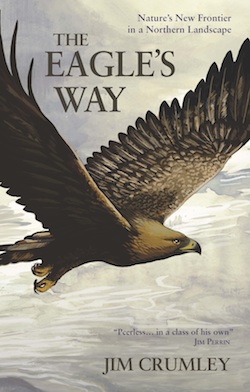
What I like best about interning with Saraband is that I am welcome to ask any questions I want. Sara and Laura are both fantastic teachers and go above and beyond to make sure I am getting good experience from my time here. Sara always makes it a point to explain why we do things a certain way in publishing so that I can understand where these processes come from. And Laura has taken time away from her work to personally teach me about typesetting, a skill I was very desperate to improve upon. Thanks to her, I was able to improve my publishing dummy project and I now feel much more confident about setting up Eagle's Wayboth Word and InDesign documents for typesetting in the future.

One of my favorite tasks thus far has been to create book trailers for a couple of Saraband’s titles. I created very simple iMovie videos, but am interested in expanding my video-editing knowledge and exploring other video software programs. I was very happy to learn that the authors of the books for these videos were pleased with what I had created; it gave me a lot of confidence to have made something that both Saraband and the authors could use on social media. Moreover, I now have another skill to add to my CV with links to videos that I created.

This experience has been completely invaluable to me. Through this internship I have been able to gain the practical knowledge I need to enter the publishing industry, and I feel much more confident about my skills. Plus, by completing a variety of tasks, I now know with which area of publishing my skill sets and interests line up. I look forward to learning more as my internship progresses.

Jenny Hamrick

The Writer’s Toolbox – negative book reviews

March 3rd, 2015 by Miriam Owen | Posted in Blog | Comments Off on The Writer’s Toolbox – negative book reviews
Tags:

As a person who shops on line regularly  I have to admit I am fond of a review.  The most useful reviews to me are the negative ones.  These are the ones that balance the (usually) many positive reviews.  They tend to go into specifics about what they don’t like.  This information helps me to make up my mind about a purchase.   For example I may not care if someone has described a book negatively because the story is cheesy, predictable or overly romanticised, in fact that may be just what I am looking for, but if it is badly translated then I know it will just annoy me.  What’s negative to one consumer may not be to another.  These negative reviews help us to make decisions.

However as a blogger I have long deliberated over the place of negative book reviews in my own personal writing. I feel obliged to provide some kind of review when a publisher or author presents me with a book and my biggest worry is about writing a negative review.  Should I make people read between the lines or just say what I think openly?   I do feel quite strongly that open debate is healthy and for this to happen honest opinion must be raised. Constructive criticism is something we all need to listen to in order to grow.  What will it mean to the author or publisher and what if it is someone that I know, meet or have to work with in the future?

Today I discovered that the International Thriller Writers Organization has been asking its authors to share their worst reviews with the public by video on their Facebook page.  What an interesting idea! The clips vary in length but overall it would seem that these authors engage with the negative reviews, they can take it, they can even laugh about it.

If you are logged in to Facebook you can see one of the clips by international best-selling British writer of crime fiction Peter James here .  David Swatling, a recently published author who also took part in this, posted this piece on Facebook referring to negative reviews:  “I appreciate anyone who takes time to write a review – good or bad. So I had no problem recording my worst at the request of International Thriller Writers. As Irish author Brendan Behan once said, ‘there’s no such thing as bad publicity except your own obituary’.”

At the end of the day I think one of the main ways to approach this is to think of the VALUE of a review.  A ‘negative’ review can provide balance and it can provide commentary on society trend and make people think outside the box. The reviewer has the choice of words in which to call a spade a spade and  if you want the spade to be used constructively in the future then the reviewer will consider carefully the value of their review in the writers toolbox.

If you are a publisher, reviewer, author or someone who reads reviews regularly I would be really interested to hear what you have to say about book reviews with negative opinions in them and the value they hold.

Visiting Speaker series, Semester 2, 2014-2015

February 11th, 2015 by Frances_Sessford | Posted in Blog | Comments Off on Visiting Speaker series, Semester 2, 2014-2015

The visiting speaker sessions for Semester 2 have already begun, with Peter Dennis, Editorial Manager at Leckie & Leckie giving a brilliant talk on commissioning, budgets and planning on February 5. The sessions will kick off again on March 5, with Jamie Crawford, Publishing Manager at RCAHMS (Royal Commission on the Ancient and Historical Monuments of Scotland). On March 12 we welcome Caroline Gorham, Production Director at Canongate Books, followed on March 19 by Fiona Brownlee, ex-Mainstream Publishing and current Publishing consultant at Freight Books. March 26 sees a welcome return for Vivian Marr, Head of Language Acquisition at Oxford University Press; and the final session is with Caitrin Armstrong and Claire Marchant-Collier, the Writer Development Team from Scottish Book Trust. All sessions are held on Thursdays in Pathfoot B2, beginning at 2pm. Please email frances.sessford@stir.ac.uk to register.

Gaelic Books Council Scholarship report – Liam Crouse

February 9th, 2015 by cs48@stir.ac.uk | Posted in Blog | Comments Off on Gaelic Books Council Scholarship report – Liam Crouse
Tags: , , , , , , , , , , ,
Liam Crouse, the first recipient of the Gaelic Books Council Scholarship, reports on his award:

Profile-Publishing1My initial interest in Scottish Gaelic literature was fostered during my undergraduate degree in Celtic and Archaeology at the University of Edinburgh. Two forms of prose, the short story and the novel, were instrumental by both fostering my linguistic ability and cementing my interest in Gaelic-language literature. Following graduation, during my return home, my once fluent conversational skills began to ebb. However, by engaging with the modern literature, I was able to keep some semblance of fluency. It was during this period that I recognised the importance of literature to minority languages – not only in terms of cultural value, but also to foster usage and regeneration.

Unlike the English-language publishing industry, in the Gaelic world we need more – more books, more authors, more publishers, more support. That was one of the reasons for creating the Gaelic Books Council scholarship. Initiatives within the past decade have focused on populating the literary corpus with quality works of prose. All the while continuing with those initiatives, new efforts are being exerted towards developing publishing capacity.

Through the course at the University of Stirling, I have gained an industry-oriented knowledge-base of the publishing industry, both in Britain and abroad. Courses in marketing strategies, business acumen, digital skills and publishing dynamics complemented each other in insightful and appealing ways. These skills were brought together in my publishing project – a geospacial app mapping out the life of the celebrated Gaelic poet Duncan Bàn MacIntyre along the West Highland Way, for which I was awarded the Faber & Faber prize for digital innovation. Towards the conclusion of the course, my thesis concerning the market for Gaelic books allowed me to investigate the multifaceted industry in a way which combined my zeal for the language with my interest in business and marketing practice.

Throughout the course, I gained first-hand experience working with publishers both big and small. The Gaelic Books Council arranged two internships at Gaelic-language publishers, one in Stornoway (Acair)and the other in Highland Perthshire (Grace Note Publications). While working with Grace Note, I helped in the translating of a children’s book which just recently was published in late November. I also secured an internship at the multinational publisher, HarperCollins, working on bilingual dictionaries. The contrast between large and small, multinational and local, and English and Gaelic made for interesting comparison.

I further became involved in Gaelic publishing in a more entrepreneurial spirit in December 2013, when news broke about the termination of Gaeldom’s sole magazine. A small group of enthusiasts and I rose to the challenge and established the first e-zine in the language called Dàna. The past year has been immensely enjoyable and enlightening, allowing me to directly apply many points from the degree. The e-zine is a tangible project with which I feel like I am helping to progress the language’s literature and we intend to continue developing the site’s outreach and influence in the coming years. It will certainly keep me busy!

The scholarship and degree have been both interesting and engaging. To those prospective publishing students: not only will it provide the keen librophile with a good balance of business sense, it will also equip you with the knowledge and connections that will allow you to thrive within the industry.

Note: Liam will shortly be taking up a post as Gaelic Development Office at Ceòlas Uibhist Ltd.

Visiting Speaker: Peter Dennis – Leckie & Leckie.

February 8th, 2015 by Heather Margaret McDaid | Posted in Blog | Comments Off on Visiting Speaker: Peter Dennis – Leckie & Leckie.
Tags: , , , , , ,

logo_highres
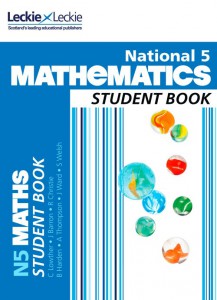
The first Visiting Speaker session of 2015 was Peter Dennis, Publishing Manager at Leckie & Leckie. The company has a goal to produce ‘high quality education resources for the secondary school market’, which includes textbooks and revision guides.

comm gordonMere weeks into starting his job, the company was sold on to Granada Learning, the first of many to acquire the company who are now (happily!) part of HarperCollins. He began in a house in St. Andrews, working in ‘an attic next to a printer and a bearded gentlemen who quietly got on and made the books.’

Part of his job is drawing the budget, from the costs and sales projections to the pricing of the book itself. You need to look at the market and justify the need for the book, and look at the competition to hit the right price mark. Too high and no one will buy it, too low and you’ll lose your profit.

He also commissions the books, so needs to brief an author (or the team of authors) so they know exactly what’s expected. Standard templates and chapter features for ease of creation and continuity are key throughout.

The instigation of the company’s real growth came from winning the Scottish contract for past papers; there was a definite need to expand and working in a rural area can only go so far. Rural companies and publishers are not doomed to failure, he adds, but there can be a limiting factor in terms of growth.

The current SQA changes, moving to the Curriculum for Excellence, is the first overhaul of this kind in Scotland’s education sector for about 20 years, so it’s a big threat to the company as their entire list is technically gone, but also an opportunity spiralling from that need to create a new range of excellent products.

This is almost a good thing, as he notes that Leckie & Leckie was beginning to run dry with topics they could create books for. As there was no real change, the scope to expand into became narrower; they tried smaller subjects with smaller cohorts, topics like Graphic Communication and Home Economics, but there weren’t many places left to go.

7bb576f7-9b3b-4e3d-a49e-f0492d143d44To create an authoritative text, you need to wait until the tinkering by the SQA is done. “People want to have something that they can open up and use,” he explains; they need to be patient at times in order to create a high quality, accurate product. Within that there are additional opportunities to spark interest and differentiate themselves using exercises, hints and tips, word banks, glossaries and so on.

The process, editorially speaking, can be much the same as with trade as there is a back-and-forth needed to refine the initial manuscripts and get them to the required standard; this is aided by peer reviews, which also gives the author a sounding board during the writing process. Author input doesn’t stop there. They help with design aspects, making sure the diagrams and images used are correctly placed and accurate.

As for the future of publishing, he says, it’s digital. They’re looking to expand their content onto a digital, interactive, fee-based platform. Being part of a larger company mitigates the risk of embarking on this project, something which they likely could not afford to risk quite yet themselves. It is new, but with tightening school budgets, they would offer free samples and justify that the appetite for such a service is there from both sides.

In Scotland, we’re lucky to have a stable curriculum, where other countries in the United Kingdom have a more volatile and politically sensitive system. In that situation, it can be a boost to publishing, but can also prove difficult to plan ahead.

Throughout his time with Leckie & Leckie, he feels that the Scottish education system itself, being different to elsewhere in the UK, made them able to retain their brand identity despite being acquired by numerous companies, which is a nice thought to end an interesting talk!

The 2014 Eduwiki Conference

February 3rd, 2015 by Crystal Butungi Rutangye | Posted in Blog | Comments Off on The 2014 Eduwiki Conference
Tags: , , ,

By Crystal B. Rutangye

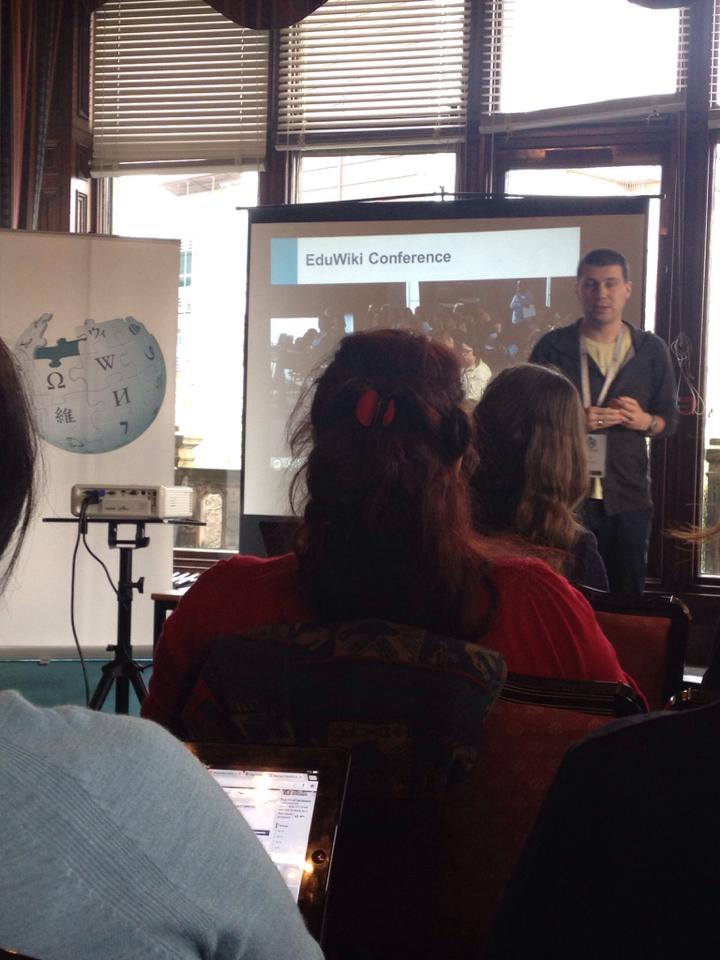
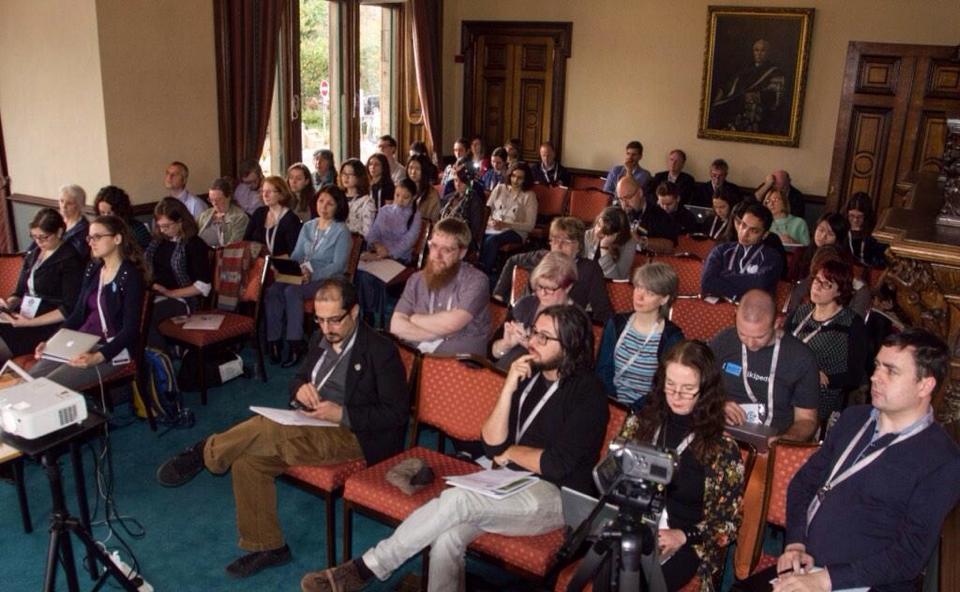
10866820_323451407857080_1957826361_nOn Friday, 31st October, members of the MLitt Publishing Studies class attended the 2014 Eduwiki conference organised by Wikimedia UK. It took place in the St Leonard’s Hall at the University of Edinburgh.

The Wikimedia Foundation (WMF) is a non-profit organisation registered in the USA, which believes in and supports the creation and free-sharing of knowledge. Thus, the WMF runs several projects and partners with organisations to this effect. Some of the commonest WMF projects include the Wikimedia Commons, Wikiquote, Wikisource, and the well-known world’s biggest encyclopaedia; Wikipedia. The projects and organisations are often organised under geographical chapters. Wikimedia UK is the United Kingdom’s chapter.

Eduwiki is an annual conference that focuses on Wikimedia’s education-based projects. This last Eduwiki conference at the University of Edinburgh was the third annual conference. It was a one-day event that majorly encompassed discussions on the possibilities of using Wikipedia as an educational tool in academic institutions, especially of higher learning.

10863471_1558436801060354_510952414_nAfter welcome remarks by Toni Sant, the Wikimedia UK Education Organiser, the conference was opened by Peter McColl, the Rector of the University of Edinburgh. A keynote presentation was then given by Floor Koudijs, the Senior Manager of the Wikipedia Education Programme at the Wikimedia Foundation. He introduced a few of the education-based projects that are funded by Wikimedia, world-wide.

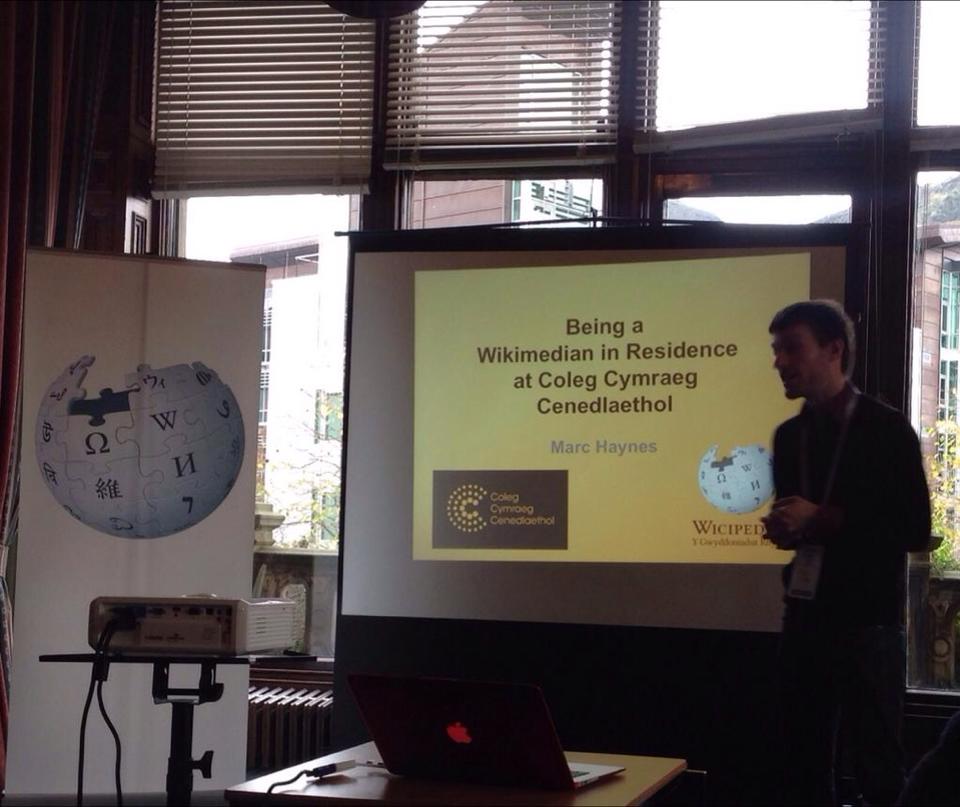
Koudij’s session was followed by presentations by three Wikimedians in residence across the education sector; Marc Haynes, Martin Poulter and Andy Mabett. A ‘Wikimedian in Residence’ is a placement in an institution taken up by a Wikimedia editor, who ‘facilitates a close working relationship between the WMF and the institution, and serves as an Ambassador for open knowledge within the host organisation’.

Marc shared his experiences with Welsh Wicipedia and Porth Esboniadur while he was in residence at Coleg Cymraeg in Wales.

Martin Poulter gave a talk on the benefits of Wikimedia comprehension exercises. He taught useful tools in Wikipedia that were new to many attendants, like the translations tool.

10846516_1558436791060355_1155340658_nAndy Mabett, Wikipedian in residence at ORCID and at the Royal Society of Chemistry, gave an enlightening talk on the use of ORCID in education. ORCID is a technology that provides a researcher with a permanent digital identifier, which distinguishes him/her from other researchers. The researcher integrates their identifier into all their online papers, submissions and other research workflows, making all their work and activities more easily recognisable. It also removes any confusion arising from distinguishing works of researchers who have similar names!

After a hearty tea/coffee break, attendants settled down to the showcasing of two Wikimedia UK supported projects. First, Brian Kelly and Filip Maljkovic gave an overview of Wikimedia projects in the UK and in Serbia. Serbia had never had Wikimedia educational events till they partnered with Wikimedia UK. They had held cultural or religious events, but not educational ones. After Brian and Filip came Kate Dorney who is the Senior Curator of V&A Museum and a TaPRA Research Officer. TaPRA is the Theatre and Performance Research Association, one that ‘exists in order to facilitate research through and into theatre and performance’. The TaPRA-Wikimedia project involves encouraging researchers to post some of their work on Wikimania project websites and on Wikipedia. One challenge of this is the reluctance of researchers to participate in the project, citing insecurities over the fact that Wikepedia information is undated, and offers no protection through copyright. Nevertheless, with more workshops, training, publicity and more convincing, researchers have increasingly got on board. Regular reports on their collaboration with Wikimania will be provided, so that other projects can learn from them.

Greg Singh, a lecturer in Communications, Media and Culture from the University of Stirling, showcased his experiences using Wikipedia as a teaching tool. His students worked on a Wikibook project; the Digital Media and Culture Yearbook 2014, which can be found on the Wikibooks web-page. He set students in groups so that they could appreciate the experience of being part of a research community. Some key things students learnt during this project, apart from general research and academic writing skills, were global communications over different time zones (group members residing in different countries had to figure out the best hours to work with each other), editing confidence, and digital knowledge. They did have challenges too; some students ended up ‘trawling because the group work was subject to miscommunication and toxic disinhibition’ among others.

After Greg, Ally Crockford, a Wikimedian in residence at the National Library of Scotland, led a discussion on ‘Education Matters in Scotland.’ She quoted a few statistics on the state of education and literacy in Scotland, and then opened the floor to the audience for reactions and possible solutions. Some facts she cited are ‘Scotland is the most highly educated nation in Europe, yet a quarter of Scotland’s population still struggles with illiteracy in their daily life,’ and ‘one in eight people in Scotland have never used the internet.’

Reactions to her presentation led the discussion back to a theme that had quite been running through every session the whole day; ‘Can academic institutions accept Wikipedia as a certifiable reference source?’ Ally alluded to Martin’s session earlier to suggest that Wikipedia can begin to be used in class rooms as early as in primary school, to help reduce illiteracy levels and poor internet skills. However, no solution was given to the challenge that Wikipedia, being an open resource, can be edited by anyone, making the credibility of its information questionable and unreliable for research. It was concluded that Wikipedia is a great starting point in one’s research or general quest for knowledge, but it cannot yet be cited in academic papers.

At this point, the conference broke off for a lunch break after which interested participants broke up into three sessions; one for new campus ambassadors and educators, another with an intermediate session for campus ambassadors and educators, and a third for students under 18, on Wikipedia projects in schools. A storify of tweets shared throughout the day was compiled by Brian Kelly, and can be followed here.