Blog

AHRC studentships available for 2012-13

February 7th, 2012 by cs48@stir.ac.uk | Posted in Blog | Comments Off on AHRC studentships available for 2012-13
Tags: , ,

Thinking of studying with us for one of our Masters in Publishing degrees in 2012-13?

If so, you may also be able to apply for a prestigious Arts and Humanities Research Council (AHRC) studentship from our Block Grant Partnership. This year, we are able to offer two full studentships (ie fees and a maintenance grant) in our subject area. Please note that you must be a Home or EU student to be eligible. (Details of other funding possibilities are available here).

The deadline for studentship applications is 30 March 2012, by which time you must also have applied for a place on our one of our programmes. For more details see the Arts and Humanities Consortium website. If you are interested in more details about our courses, please use the details on our Contact page.

World Book Day 2012

January 19th, 2012 by cs48@stir.ac.uk | Posted in Blog | Comments Off on World Book Day 2012
Tags: , ,

The Bookseller recently reported on developments for World Book Day 2012, which will be taking place on 1 March.

We’re delighted that a graduate of Stirling Centre for International Publishing and Communication, Kirsten Grant, is leading the developments as WBD’s new director. Before heading the WBD team, Kirsten worked as campaigns director at Penguin Children’s Books. Along with the WBD committee, Kirsten will be implementing lots of exciting plans, including ‘The Biggest Book Show on Earth’ (an event at London’s South Bank with nearly 1000 children), a WBD app, WBD Ambassadors (including Peter Andre), and a tie-in with the Blue Peter Book Awards.

Kirsten commented to The Bookseller: ‘The marketplace has changed a lot since WBD was launched and there hasn’t been a real root and branch overhaul of the initiative for a long time. My aim is to reconnect WBD with today’s consumers. That means reimaging the whole of WBD; what it looks like, what it says to people and how we can get children and adults committed to it.’

World Book Day focuses exclusively on children’s and young adults’ books and reading. World Book Night, to be held on 23 April this year, extends the focus to adults.

Banned Books Advent Calendar

December 20th, 2011 by Katherine_Spiker | Posted in Blog | Comments Off on Banned Books Advent Calendar
Tags: ,

When you think of an advent calendar, the first thing that comes to mind Is Christmas (and possibly chocolate). Banned books are definitely something that is not generally associated with this holiday tradition. However, the International Federation of Library Associations as created the worlds fist video Banned Book Advent Calendar.

This unique advent calendar works exactly the same way a traditional advent calendar works. Each day a new video is posted on sites like youtube and vimeo around the world, and highlighting a book that has once been banned in different parts of the world. The books in question have so far been very different and banned for different reasons. There have been obvious titles such as Mein Kampf by Adolf Hitler and more surprising titles like Charlie and the Chocolate Factor by Roald Dahl. Many of the books in the calendar were banned because they were deemed too obscene or too graphic for readers. Others such as Mein Kampf were feared and hated because of what they represented.

It doesn’t matter why the books were banned. The fact that they were banned highlights censorship throughout history as well as in our modern world. This video calendar is overthrowing that stigma and celebrating the right of freedom of speech. The first twenty days of December has showcased books that have certainly left their mark on history. The last few days before Christmas is sure to be equally as captivating.

– Katie Spiker

Spain’s Digital Times

December 19th, 2011 by Almudena_Santalices | Posted in Blog | Comments Off on Spain’s Digital Times
Tags: , ,

It seems these days we only think about ebooks. Two Spanish publishing houses, Ediciones B and Planeta, and Spain’s biggest bookseller Casa del Libro, just launched new products, all of them related to the electronic books.

Ediciones B has not only launched last month a new digital imprint, B de Books, but also claims to be “the first e-book publishing venture without DRM encryption”.  In the beginning B de Books will have 300 titles available and will be able to buy online in platforms such as Amazon, Libranda and Apple.  For its part, Planeta has released two new low-priced e-book imprints: Zafiro (for romance) and Scyla (for science fiction, fantasy and horror).

Casa del Libro is currently the e-book market leader in Spain, and launched November 23th its e-reader Tagus, a six-inch screen, Wi-Fi-enabled device, with a copy of the Real Academia Española dictionary.  It also offers cloud storage of an unlimited number of titles for an unlimited time. E-books can be browsed online and read offline on other devices after downloading a free app from Android Market and the Apple App Store. According to Xavi Solà, this release has given access to “the largest Spanish-language book catalogue in the world”.

Since this September Amazon has begun operating in Spain, offering printed titles, before launching the Spanish Kindle. It is also worth mentioning the positioning of Google Books. Luis Collado, director for Spain and Portugal Google Books and Ebooks says “the firm aims to make reading e-books as easy as using email”.

– Almudena Santalices

Sources: ABC / Publishing Perspectives.

The God Complex

December 6th, 2011 by Helen_Lewis-Mcphee | Posted in Blog | Comments Off on The God Complex
Tags: , , , ,

My mum’s just finished her book. I don’t mean she’s finished leafing through the latest Dan Brown or Marian Keyes. After months of hard work and hermitic habitude, she has emerged, blinking into the daylight with her brand new manuscript: 80 000 words currently winging their way through cyberspace towards her editor.

And, as if by magic, or miracle, there are all these new people in the world. Claudia, and Aileene, and Lydia, and Jim, and, in his own way, Marius. My mum didn’t just produce my sisters and me, she’s given life to countless characters. And she’s given them lives. With friends, and families, and jobs, and joy, and, often, tragedy.

That’s a pretty scary concept. What does an author do with all this power, all this potential? All these people, all these lives, and there she is, the omnipotent puppet-master, supreme lord of all she’s created. She can breathe life, cure cancer, bring people back from the dead.

But here’s the rub: all of that is just an illusion. There are really no puppets for the master. These characters take the scrap of existence they’ve been given, and they run with it. They make mistakes. They do things they’re not supposed to. They live their lives. And there’s apparently nothing she can do to stop them. All she can do is observe as their stories unfold and their lives unravel.

She cares about them. She worries about them. She cries with their joy, and with their pain. But in the end, she can’t protect them from themselves. All she can do is give them the best start she can, and hope they’ll do her proud with it. Maybe it’s not a God complex. Maybe it’s a Mum complex.

Another author recently said that “Writing a book is just like giving birth.” You live with this embryo of an idea, feeding and nurturing it for months from your very core, until it’s grown big enough and strong enough to survive in the big wide world. She finished by warning of the terrors of publishing: “It’s like handing your baby over to a stranger, who changes its name, puts horrible clothes on it, and leaves it out in the cold to die…”

Helen Lewis-McPhee

Liz Small of Waverley Books

December 5th, 2011 by Amy_Raybould | Posted in Blog | Comments Off on Liz Small of Waverley Books
Tags: ,


Liz Small of Waverley Books joined the Publishing Studies courses at Stirling University on 10th November 2011 to give a talk about marketing and sales in publishing. Liz immediately grasped our attention when she announced that “everything on the front desk will be given away to you all for free”. Obviously the prospect of free books to a room of 32 publishing students went down a real treat, we all sat excitedly awaiting the moment when we could rush to the front of the room and grab everything and anything that we could.

Liz gave us a brief overview of Waverley Books, of which she is the sales and marketing manager. Waverley Books is a very small firm, with only seven employees. However, it is an imprint of a larger publisher, Geddes and Grosset, who have become successful over the years due to their grasp of the referencing genre. They sell dictionaries internationally and this provides excellent revenue for the company.  Waverley is also part of the large DC Thomson Group, a Scottish based company which owns newspapers, magazines, comics and, most famously The Beano and Dandy!  

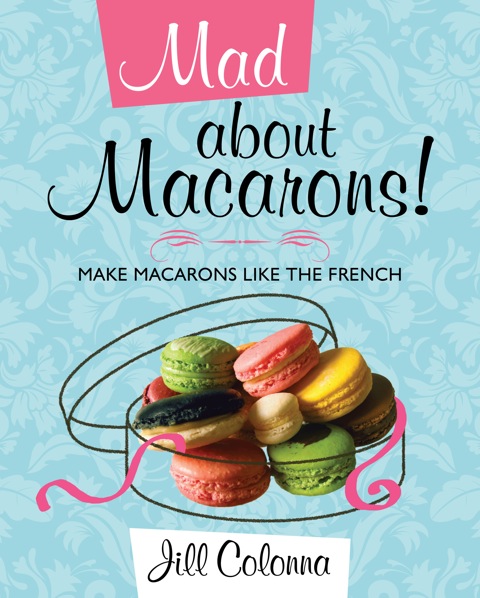
Liz went on to discuss the books which she had brought in for us to take away and read. She firstly talked about Mad about Macarons!, this book has a charming back story about a women who moved to Paris with her husband and found her way in French society by learning to make wonderful macarons, or macaroons as they are know in Britain. Liz found that macarons are currently popular and considered to be very fashionable therefore she knew the book would have a market especially in upmarket independent book shops within the London area. She also discovered that macarons are extremely popular in America and Singapore, 20,000 copies of the book has been sold so far and the majority of sales have been within the international book market. Liz said that as the book has sold well in the American market Waverley Books could possibly consider printing a US copy of the book specifically for its marketplace.

Liz then covered Waverley’s first novel, Mavis’s Shoe. The book is set the Clydebank area of Glasgow during the Clydebank blitz in WW2. The author was inspired to write this book because of the impact the Iraq war had on the world. Liz used clever marketing techniques to promote this book, she sent out as many books as she could to as many important and influential people within the industry.  She also set up a performance in WHSmith in Glasgow in order to gain immediate pull factor between the consumer and the novel.

The final book Liz talked about was The Broon’s Day Oot.  Liz stressed that Waverley’s association with DC Thomson who own the famous Scottish comic, was not as much of an advantage as you would think as they still have to put in a full pitch to secure the right to use the characters. Waverley printed The Broons, Days Oot!, which sees The Broons speaking outside the comic strip format for the first time, is a guide to Scotland’s best days out. Liz worked with the Daily Mail newspaper and created a roadmap and quiz book to coincide with the release of the book; this was a successful and great marketing ploy to get this product to the masses. It is also invaluable marketing as it can create a word of mouth buzz about the book.

Liz closed her talk with allowing us students to rush to the front of the room and grab the book that we really wanted!

– Amy Raybould


Read it. Live it.

December 4th, 2011 by cs48@stir.ac.uk | Posted in Blog | Comments Off on Read it. Live it.
Tags: , , ,

‘What is the use of a book,’ thought Alice, ‘without pictures or conversation?’ – Alice’s Adventures in Wonderland, Lewis Carroll

Black text on white paper has been the format of the book for centuries. The ebook mirrors the same format on a screen with few enhanced versions featuring related multimedia content. Readers must use their imagination to experience the story beyond the text on the page. But what if instead of reading the book, you could live it?

Simon Meek and Tern Digital, a subsidiary of Tern TV, attempted to do just that when they developed a digital extension of their popular children’s show on Channel 4, KNTV, in 2008. The site offered what Simon calls ‘a window into the world behind the show’. Slabovia.tv featured character profiles, games, videos, and The Potato – ‘State-Approved News and Gossip’ from KNTV’s fictional land of Slabovia. Later, the idea to capitalize on the social networking scene came with the creation of Slabspace, a digital world in which members could enter the world of Slabovia. Slabspace offered Slabovian identities, jobs and a theatrical community to further involve the fans of the television series and website. While the project only lasted 18 months, Slabovia.tv and Slapspace showed the potential of a television station’s digital department and encouraged Meek’s interest in interactive storytelling through multimedia.

In 2009, the gaming company Quantic Dream released the video game ‘Heavy Rain’, creating an interactive storytelling platform. ‘Heavy Rain’ has four main characters embroiled in a mystery with the central theme ‘How far would you go for the one you love?”. The game’s plot is dictated by the manipulation of the characters by the player. Players can explore their environment, steer dialogue and control the characters during dramatic action scenes. If a character dies as a consequence of the player’s decisions, gameplay will switch to another character’s perspective and the story continues. ‘Heavy Rain’ turned the reader into the writer, taking control of the narrative to shape its conclusion. While the game did better than expected and led to an emphasis in plot and story, Meek admits the constant evolution of the video game development process is often not conducive to good storytelling. So how do you tell a good story and inspire audience interaction?

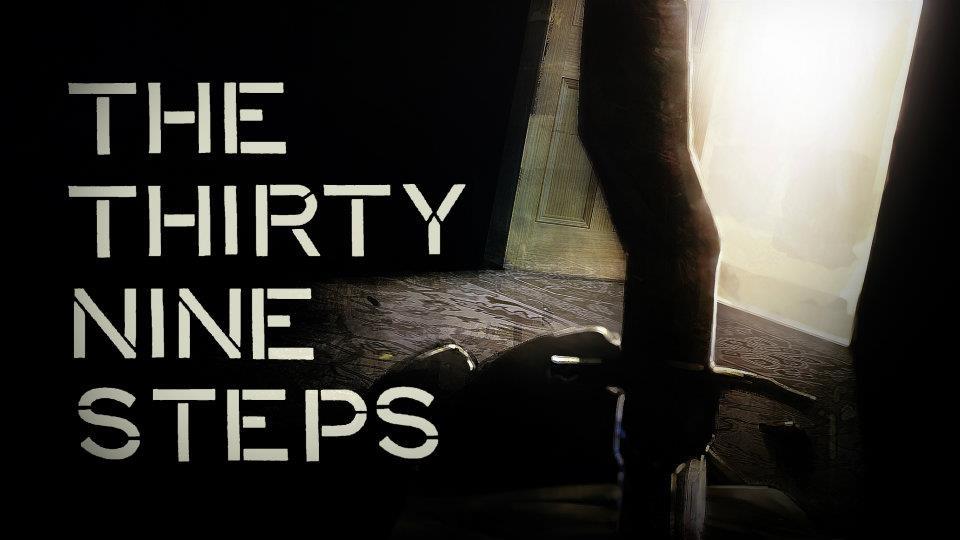
This is where Digital Adaptations comes in. Digital Adaptions, a new company with Meek as Executive Producer, seeks to transform the storytelling process by creating the entire narrative as a multimedia project. The concept is simple: generate a physical representation of the plot, setting, and characters of a novel and let the audience immerse themselves in the story. Their first project, John Buchan’s ‘The Thirty Nine Steps’, set for release in 2012, uses details from the novel to build the environment of London in 1914. The reader is given the opportunity to witness the events and follow the plot of the novel through the eyes of Richard Hannay, the main character of the espionage thriller. The player can take time to explore the environment, including Hannay’s personal quarters, constructed through details found in the novel. The dialogue of the novel is recreated using voice actors from the Citizen’s Theatre, recorded as they acted out the book in play form. Digital Adaptations maintains player interaction through the illusion of control; however, unlike ‘Heavy Rain’, the player only controls the character within the bounds of the original plot and completes key events to reach the conclusion.

‘The Thirty Nine Steps’ is built on the idea that a reader desires something beyond the traditional feeling of reading a novel from a page, with Digital Adaptations spear-heading the movement to expand the storytelling experience. Whether they are successful in their venture or not remains to be seen, but the enthusiasm of the class during Meek’s visiting talk bodes well for the project.

Many thanks to both Simon Meek and all of the visiting speakers this semester.

Alicia Rice
DBC Pierre – Vernon God Little

December 2nd, 2011 by Emma_Dunn | Posted in Blog | Comments Off on DBC Pierre – Vernon God Little
Tags: , ,

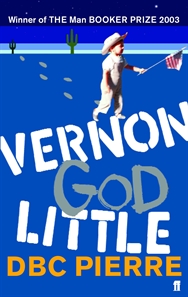
On the 14th November DBC Pierre came to speak at the university about his Man Booker prize winning novel Vernon God Little. This event was organised as part of the Booker Prize Foundation; whose aim is to promote high quality fiction and encourage debate among students. Stirling was one of just five universities in the country selected to take part in the initiative.

Vernon God Little won the Man Booker prize in 2003 and has been described as ‘original, engaging and fantastically well constructed’ by Sarah Waters from the Daily Telegraph’s Books of the Year.

The novel is told from the point of view of Vernon Gregory Little who is accused of a high school massacre which killed sixteen students. As the blame increasingly falls on him his plan is to run away to Mexico.

DBC Pierre was born in Australia before moving to Mexico where he spent most of his later childhood years. He would often travel across the border to the US where he saw ‘the same divides applied to the richest country on earth.’ He was inspired to write the novel after seeing an American teenager on TV, being put into a police car after a potential high school shooting. It made him feel angry about our culture and society and made him question if this ‘kid’ could really be fully responsible.  For Vernon God Little his starting point was ‘what kind of fucking life is this?’ He used his experiences as a teenager in Mexico; growing up at a time when the US still seemed innocent and how children with guns shattered this illusion.

During the talk DBC Pierre read a short extract from his book in a slow South American drawl and then opened up the floor for questions.  Are we supposed to believe everything Vernon says? Yes, he is writing from the point of view of most teenagers where the world is black and white, either fantastic or dire, there is no in between. Growing up in a media saturated society, fed on Jerry Springer and Oprah – Vernon is a product of his society. When thinking about the voice we must be mindful that Vernon is an adolescent – parents are the enemies, or at that age they should be.

In terms of how he constructs a plot; his method is to make a huge meticulous plan which he lays out in an Excel spreadsheet, with carefully constructed sub-plots, and then goes away and does something completely different. He ‘jumps in the deep end and tries not to drown.’ His advice to writers is to write without structure, without proper spelling and grammar even, to just write in all kinds of moods and frames of mind, and even though most it will have to be edited out, there will be something there to work with. It is easier to edit than to write great things first time round – ‘go in and do carpentry.’ And whatever you do, do not show a first draft to anyone. Does he feel he has become a writer since winning the Man Booker? DBC Pierre left this open to debate proclaiming ‘you learn to write the book you are writing – it doesn’t mean that you have learnt to write.’

Saltire Society Literary Awards 2011

December 1st, 2011 by cs48@stir.ac.uk | Posted in Blog | Comments Off on Saltire Society Literary Awards 2011
Tags: , , , ,

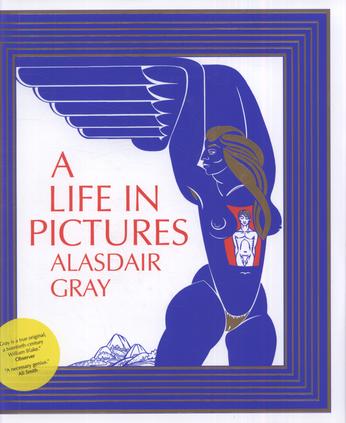
Alasdair Gray's award winning A Life in Pictures

Professor Claire Squires, Director of the Stirling Centre for International Publishing and Communication, has this year been one of the judges for the Saltire Society Literary Awards. The Awards were made today in a ceremony at the National Library of Scotland. She writes here about her experience of being a judge:

For a while now, I’ve had a research interest in literary prizes. I organised a conference on the topic in 2003, at which James F English gave a keynote lecture which would eventually end up as part of his impressive book on cultural awards, The Economy of Prestige. I’ve also written about literary prizes, including in my book Marketing Literature: The Making of Contemporary Writing in Britain. In this, I traced the role of literary prizes in validating books, establishing authors’ careers, promoting literature, and – all important to the publishing industry – selling books.

More recently, I’ve been acting as the administrator (this year, with the able assistance of  MLitt in Publishing Studies student and intern Helen Lewis-McPhee) for the DeLong Book History Book Prize, which the Society for the History of Authorship, Reading and Publishing runs, and wrote a blog for them about literary prizes over here. Back when I worked at Hodder & Stoughton, I had the responsibility for submitting our books to prizes (and I remember our excitement when William McIlvanney won the Saltire Book of the Year Award for The Kiln.)

But this year for the first time I’ve been acting as a judge, for the Saltire Society Literary Awards. This has meant, since June, reading over 100 books for the First Book of the Year and the Book of the Year. As you can imagine, this proved both a fantastic experience and a challenge, to the point where I actually felt physically sick from reading so many books at one point. (Don’t worry – I’ve recovered and am reading again.)

Today, we made our awards: to Luke Williams for his brilliantly assured debut novel The Echo Chamber, and to Alasdair Gray for his wonderful A Life in Pictures. Awards were also made for the Scottish History Book of the Year to Emma Rothschild for The Inner Life of Empires: An Eighteenth Century History and for the Scottish Research Book of the Year to James McGonigal for Beyond the Last Dragon: A Life of Edwin Morgan. His publisher Sandstone later celebrated with deluxe chocolate brownies, I hear.

The experience of judging literary prizes is always going to be slightly different from that of analysing or commenting upon them, but nonetheless the two awards I was involved with backed up some of my knowledge about how they work. Luke Williams’ publisher Hamish Hamilton confirmed after the ceremony that they’ve brought forward the release of the paperback of his book to capitalise on sales. Fancy a prize winner for Christmas? (I’d recommend it!)

And then: controversy! The judging panel had decided (unanimously) to award Alasdair Gray the Book of the Year. However, just before the ceremony, we found out via his publisher Canongate that he had decided to refuse the award. We quickly reconvened and – although we had a very fine shortlist (including one of my favourites, A L Kennedy’s The Blue Book) – we decided (as BooksfromScotland.com reported it) to refuse the refusal. Will this refusal end up having a greater publicity impact than accepting? We’ll see. There’s almost bound to be an article in the Scotsman about it tomorrow…

Faith, Hope and Charity

November 29th, 2011 by Helen_Lewis-Mcphee | Posted in Blog | Comments Off on Faith, Hope and Charity
Tags: , , , , ,

Last week, the Booksellers Association hit out at charity shop booksellers, claiming that these retailers are afforded an unfair advantage in the industry. With certain exemptions from corporation tax, VAT and rates, and a staff comprising largely of volunteers, it is argued that charity shops benefit from a unique position within the trade with which less charitable independent retailers are finding it impossible to compete. The Bookseller reports an estimated 8000 such brigands are abusing this advantage, turning profits of close to £20 million from book sales alone.

With our independent and second hand booksellers in such dire straits, surely it’s time to call a halt to such blatant exploitation, and level the playing field a little? I mean, when those Goliaths of the online world Amazon first made noises about taking over their only real competitor, the Book Depository, it sparked national outcry and an OFT investigation at the implications this would have for fair competition within the trade. So why is it one rule for Amazon and another for Oxfam?

I do hope we’re not missing the point here.

BA chairman Peter More has accused Oxfam of “acting more like a business than a charity”, adding that this was “a concern”. A concern? Now, I’m as concerned as anyone else in the industry for the future of indie bookshops. When I have the time (and the money) to spend browsing their shelves, I like nothing better than to pass up the tempting discounts offered by Goliaths and supermarkets alike in support of our struggling book-retailing entrepreneurs. But I also choose to frequent my local charity shops, and I certainly won’t be made to feel guilty about it. I refuse to accept that charities turning a profit and conducting their businesses efficiently and professionally is a Bad Thing. Without their retail turnover, these charities wouldn’t be able to support their work against poverty, homelessness, animal cruelty, heart disease, and cancer, to which we are all indebted at some point in our lives.

When I go to an indie bookstore, I go there for the atmosphere, the ambiance, the whole experience associated with book buying that first attracted me to the industry as soon as I was old enough to spend my own pocket money. This is not the same reason I go into a charity shop. The customers who are spending their hard-earned pocket money and pensions in the charity shops are not the same ones abandoning their high-street independents in favour of a cheap read. And I believe I’m not the only person who feels this way. I have faith in the Great British bibliophile and their loyalty to local independent retailers.

Maybe we should be more concerned with the competition presented by the deep discounting and heavy marketing favoured by the chain stores, online retailers and supermarkets. Maybe, instead of lashing out at those businesses still turning a profit, booksellers could take a little more time minding their own. Maybe the indies should to take a leaf out of the charity shops’ books.

Helen Lewis-McPhee