Blog

Eleanor Logan and Chapter Twenty

November 24th, 2011 by Almudena_Santalices | Posted in Blog | Comments Off on Eleanor Logan and Chapter Twenty
Tags: , ,

On Thursday 17th, November the visiting speaker Eleanor Logan gave us an interesting talk about her professional career and the changes that have taken place in bookshops over the years particularly in Scotland.

Eleanor began her career in 1999 at the bookshop chain Dillons and saw firsthand how the majority of these bookshops were taken over by Waterstone’s and some were sold to its competitor Ottakar’s. She went to work for Ottakar’s, which was a small family business and in ten years, was lucky enough to see it grow from three or four shops to more than a hundred. “It was great fun to work with them and see how they grew”. In 2008 Waterstones absorbed Ottakar’s, “my enemy became my employer”. While she worked for Waterstones she did marketing, and retailing. “It was a strange situation, but very interesting and satisfactory since I had the opportunity to discover firsthand what happened in bookstores across the country”.

Early this year she reassessed what she wanted to do with her life and her job and she decided to create her own business: Chapter Twenty is the result – a marketing and events agency delivering innovative services to the book industry, authors and the public. She works with publishers to organise author events in Scotland and the North of England.

With Internet and new technologies people’s way of buying is changing. It is true that customers want value but they also want convenience, which is why Amazon is having such success. Eleanor issued a stark warning that because of these changes 25% of high street bookstores have closed “and with Borders gone, and only Waterstones left, and if this goes too, then we will only have WHSmith!”.

Eleanor has a clear view of how bookshops should work. Bookstores need to improve their image and their brand. For example, window displays should be updated, and events need to change, “we need to make them more interesting and not just about listening to the author”.  The Scotsman Literary Dinners, Book Festivals and World Book Night, all are good ideas to help readers engage with authors.

In Scotland there are vast areas with no bookshops which is why the Ottakar’s store in Oban set up a travelling bookshop. Now it has been taken over by Waterstone’s On Wheels, where they are keen to reconnect with the community.

Image by Weegie Wednesday

By Almu Santalices and Emma Dunn


Copyright: what’s it all about?

November 21st, 2011 by Catriona_Cox | Posted in Blog | Comments Off on Copyright: what’s it all about?
Tags: , ,

As of Sunday we have answered this question. Well, not quite; the day did, however, lead to interesting insights and ideas on the past, present and future of copyright. I was delighted to hear that it was a few Irish lads that started the whole ruckus. Things really kicked off in the 6th century and copyright, although lacking now in literal battles, has continued to be as contentious an issue as it ever was. Copyright has over 1000 years of legal tradition that was first contested through the Brehon Laws between St. Colmcille and St. Finian.

The speakers present were Ronan Sheehan, Dr.Aileen Fyfe and Stephen Taylor. It was, of course, chaired by our own Dr. Padmini Ray-Murray.

Ronan was truly charismatic to listen to and I think drew everyone in the room right into the bones of the issue. Something that shone through is that copyright was not considered theft but was infringement of a civil right. This is something that is coming to the forefront of the discussion on copyright again today.

Aileen then took us through the history of copyright here in the UK during the 18th and 19th centuries. 1709 saw the first British Copyright Act, officially called the Act for the Encouragement of Learning. Copyright length has varied through the years, Aileen’s ability to remember the length and times of these variations was very impressive.

Stephen Taylor dealt with the more modern aspects of Copyright. He particularly referenced the Digital Economy Act which is the big 21st century Act. Stephen was very interesting and easy to listen to and also had a few fun anecdotes to share. The whole idea of blaming ISPs came up and is rather contentious.

I loved the Irish references that were scattered throughout Ronan’s opinions. It was interesting to hear of Piggley Pooh, and I am now surprised that I’d never heard of this case.

I think that most people present seemed to understand the value of copyright but did not really think that the terms that copyrights are valid for are sustainable or useful. This has made me realise that I approve of copyright but only think that it should last the lifetime of the author/creator. The whole issue seems to be the question: What is the commodity? If people can answer this then maybe we will know.

I thoroughly enjoyed listening to all the speakers, and as Padmini led us in questions and debate I think that a great balance was struck between the three speakers and their audience.

Catriona Cox

Pitch Publishing

November 18th, 2011 by Katherine_Marshall | Posted in Blog | Comments Off on Pitch Publishing
Tags: , , ,

On Thursday 3rd November, our visiting speaker was Jane Camillin, who gave us a fascinating insight into her company, Pitch Publishing.  In 2009 Jane, together with her brother, decided to set up the company following her redundancy from dictionary publisher Chambers.

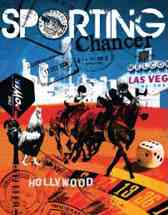
Pitch Publishing is a sports publisher but with a distinctly local feel.  The publisher is characterised by its Miscellany and On This Day series; products of the company’s close working relationship with football and cricket clubs across the UK. Jane explained, that while the company’s main source of income comes from the sale of local titles, this has allowed them to take bigger risks with titles such as: Sporting Chancer: One Man’s Journey to Take on the Worldthe amusing story of one man’s attempts to gamble on various sporting events around the world. Their bestselling book to date, The Worst of Cricket, has been reprinted ten times since its original publication in 2008.

During her talk, Jane described the various aspects of running a successful publishing business and stressed the importance of: good cover design; market research; author contracts and, of course, P&Ls!  Although Jane’s background is in marketing, she admitted that she no longer has the time or resources to conduct huge campaigns for her titles choosing instead to only do the marketing “she needs to”.  Despite this, Jane is keen to exploit social media and encourage her authors to blog, tweet and generally keep in touch with their readers.

Jane’s insights were certainly refreshing, proving that even the most experienced publisher is constantly learning in this ever-changing industry.

Katherine Marshall

“Publish and Be Damned”: Banned Books at the National Library of Scotland

November 15th, 2011 by Nuria_Ruiz | Posted in Blog | Comments Off on “Publish and Be Damned”: Banned Books at the National Library of Scotland
Tags: , , , , ,

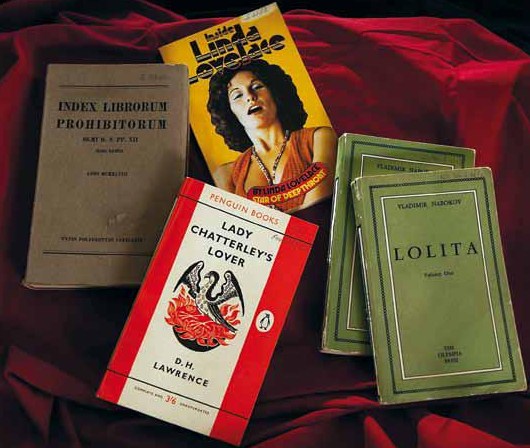
A selection of Banned Books from the exhibition.

‘Banned books: Censorship of the printed word’ was a major exhibition at the National Library of Scotland, running from 24 June to 30 October 2011.  Although the exhibit has now ended, all of the books on display are available for consultation in the Library.  For those who missed their chance, Jan Usher and John Nicklen have produced an excellent guide in the current issue of Discover NLS.

Bring me your blasphemous and raunchy, your libellous and seditious, your controversial and vitriolic.  A trip to the “Banned Books” exhibition which ran at the National Library of Scotland until 30 October 2011 promised an afternoon of thought-provoking displays and analysis on a subject which has existed almost as long as books themselves have existed – censorship.  It did not disappoint.  The history of banned books is indeed a tale of the unexpected and the uncomfortable.

Arranged around the juicy themes of sex, religion, politics and society, the exhibit threw up some familiar old favourites – and some surprising additions.  Lady Chatterley’s Lover, The Satanic Verses, the ‘official’ biography of Linda Lovelace, these I expected.  But Bambi? The Bible?  Housewives’ favourite Woman’s Weekly? Surprising too was the sheer number of children’s picture books and stories.  Sometimes it is not profane language and incendiary politics that offend the most, but the simple introduction of different worldviews.  Three books selected for special attention were And Tango Makes Three (2007), The Rabbit’s Wedding (1960) and Daddy’s Roommate (1991).  All three are children’s stories which to this day are attacked because of their perceived alternative messages on lifestyles and relationships.  Yet taking time to read them, I was struck more by their captive storytelling than anything else.  Banned Books posed the question, what role should editors play in censoring an author’s work?  To author Garth Williams after all, The Rabbit’s Wedding was “only about a soft, furry love and has no hidden message of hate”.  To this I answer that the point where a story becomes something else is highly subjective; perhaps no editor can ever prevent a book being misrepresented somewhere along the line.

What moved me as I walked between the glass cases was the preservation of these books and magazines.  From Republicas del Mundo, written by Jerónimo Roman y Zamora in 1575, to Bret Easton Ellis’ American Psycho from 2007, all of these books were in excellent condition.  They may have had their words mutilated and obscured, their pages stamped with brands of shame, and their covers confined by shrink-wrap to protect innocent eyes, yet someone, somewhere had loved this book enough to keep its dangerous words safe.  They may not have liked its content, but perhaps a respect for the written word is culturally ingrained in all of us?

My optimism lasted precisely for the minute it took me to walk from the themed displays to the ‘Living with Censorship’ section, where I was confronted with the history of book burning and the growing violence of censorship.  For every book the National Library had on show, a hundred thousand more have been ceremonially destroyed in the name of censorship.  I can understand, in a historical perspective, why books have been banned and entire libraries have been burned.  While I may not agree, I can understand.  But the trend for individualised violence against books is not something that I can comprehend.  There have been books considered so controversial that they have become living things to these societies, to be issued death warrants, burned alive with their authors, and actually hanged.  Mass book burning is acknowledged as a public event that makes a political statement, but just what kind of statement trying and hanging a lonely book makes is another matter entirely.

Heinrich Heine, the German poet and essayist, noted in the nineteenth century that “where they burn books, they will ultimately burn people also”.  This led me to ponder on the vogue publishing development of the moment, the electronic book.  How does the digital word fit into the centuries-established tradition of literary censorship?  You cannot burn an electronic book, nor does it carry the connotations of personification that so characterise the printed word.  Moreover, while you may ban citizens from buying a book, it is infinitely more difficult to stop them downloading an illicit copy.  As this exhibit clearly illustrates, for much of their history, books have been contentious because of their ideas.  The twenty-first century however, has rather different concerns: the book’s physical form.  Yet in the furore about an e-book not ‘being a book’, perhaps we are missing a new and exciting chapter in the history of censorship.

Man Booker Prizewinning author DBC Pierre to visit University of Stirling

November 12th, 2011 by prm | Posted in Blog | Comments Off on Man Booker Prizewinning author DBC Pierre to visit University of Stirling
Tags: , , ,

Award-winning novelist DBC Pierre will speak on the University of Stirling campus on Monday 14th November in the Pathfoot Lecture Theatre. The 6:30 PM event – a reading, interview and Q&A session – is free and open to the public. The event will be followed by a book signing. Doors open at 6 PM, and no tickets are required.

DBC Pierre’s visit is supported by the university and the Booker Prize Foundation. This year, for the first time, Stirling was selected to be one of only five U.K. institutions taking part in the Booker Prize Foundation’s Universities Initiative. Our colleagues in the Creative Writing department have been instrumental in organising this initiative, which involved all first-year students at Stirling, regardless of their course of study, receiving copies of Pierre’s novel Vernon God Little. Students have consequently been invited to attend student-led reading groups discussing the book in the week before his visit.

Vernon God Little won the Bollinger Wodehouse Everyman Prize for Comic Fiction and – controversially – the 2003 Man Booker Prize. The Man Booker judges described it as a “coruscating black comedy reflecting our alarm but also our fascination with America.”

Professor Gerry McCormac, Principal and Vice Chancellor, says: “I am delighted that the University is participating in the Booker Prize Foundation’s Universities Initiative. Created to introduce students to high quality, contemporary fiction, it allows students across our various disciplines to have a shared experience to encourage debate.”

World Book Day 2012

November 8th, 2011 by Paola_Gonella | Posted in Blog | Comments Off on World Book Day 2012
Tags: , ,

World Book and Copyright Day (also known as International Day of the Book or World Book Days) is a yearly event organized by UNESCO to promote reading, publishing and copyright. Since 1995, it has been celebrated all over the world on April 23rd, but in the United Kingdom and Republic of Ireland it is held on the first Thursday in March, a decision made to avoid clashes with Easter school holidays, as well as the fact that it is also the National Saint’s Day.

Drawing inspiration from a 90-year-old Catalonian tradition where roses and books were given as gifts to loved ones on St. George’s Day, World Book Day UK was launched by Prime Minister Tony Blair back in 1998: several million schoolchildren in Great Britain were given a £1 special World Book Day Book Token (€1.50 in Ireland) to be redeemed against any book in any UK bookseller. Since then, the event has grown each year to encompass more initiatives, such as Quick Reads Initiative, a series of short books by bestselling authors and celebrities designed to encourage adults who do not read often, or find reading tough, to discover the joy of books.

World Book Day 2012 in the UK and Ireland will take place on Thursday 1st March and it is set for a revamp. Led by children’s marketing specialist – and Stirling alumna –  Kirsten Grant as its new director and Penguin’s Joanna Prior as chair, the new management hopes to achieve more than one million book token redemptions next year. As one of the many initiatives organised for the occasion, more than 1,000 guests are expected to attend the first UK-wide Online Festival, which is expected to take place on London’s Southbank and will be streamed live to thousands of children in schools, libraries and bookshops. WBD will also work with the Publishers Association to boost political engagement through the government’s Reading For Pleasure agenda.

The Insecure Life: a Writer’s True Story

November 6th, 2011 by Rachel_Chase | Posted in Blog | Comments Off on The Insecure Life: a Writer’s True Story
Tags: , , ,


Rachel Chase, MLitt in Publishing Studies student, reports on our latest Visiting Speaker:

Paula Morris, a fiction writer and lecturer at the University of Stirling, talked about the life of a writer—warts and all. And yet, even after detailing the hard aspects of such a career, she said, “I wouldn’t change what I do at all.”

Paula dispelled two central myths in her lecture: 1) an author’s career is one of complete isolation and 2) if you’re good enough, you’ll get published.

An author’s career is one of complete isolation . . . think again.

Although the writing itself may be isolated, Paula pointed out, a huge part of an author’s career is a collaboration—it’s all about relationships. The author must have important relationships with the agent, editor, rights buyer, publicist, readers, other writers, designers, and sales and marketing. Some connections are direct ones while others exist via the agent or editor. But all of these relationships are important.

However, a writer cannot rely on the publishing company to do everything. Increasingly, authors need to market themselves and their products. Paula, who has a background in marketing, finds it more productive to get up and do something to promote her latest titles than gripe about what the publishing company is or isn’t doing. The digital wave has not only rocked the publishing industry as a whole, but it has also put a burden on authors to have a digital presence. Blogs, websites, Facebook pages, and tweets all take time. Paula wisely advised to be careful what you say online. You never know who is reading.

The life of an author is a busy one. It is a life of constantly dealing with people who want something from you: answers to questions, a review for another book, a free book, a biography for an event, a manuscript read, an introduction to your agent, a lecture, and so on. Writers have much more to think about than simply writing books; they have to give interviews, visit writer’s groups, visit schools, appear at festivals, attend meetings with agents and editors, work with accountants, answer e-mails, update websites and blogs, attend photo sessions, fly to various parts of the world, organize book launches, visit booksellers, and much more. There may be many words to describe the life of a writer (busy would certainly be on the list), but “isolated” is not one of them.

If you’re good enough, you’ll get published . . . simply not true.

Books are a commodity and publishing is a business. It is the market that dictates whether a book sells or not, regardless of its intrinsic value. To be a published writer, you need luck, timing, the support of other people, and market forces in your favor. For an author, every new book is riddled with the fear that it could be his or her last book. “It’s an incredibly insecure life,” Paula said.

Yet despite the difficult aspects of making writing a career, Paula announced, “I wouldn’t change what I do at all.” It is a hard road but a rewarding journey for those who want to make writing a career. Thanks Paula for your insights! You can check out Paula’s website here.

Whose Copyright is it Anyway?

November 3rd, 2011 by Arundati_Dandapani | Posted in Blog | Comments Off on Whose Copyright is it Anyway?

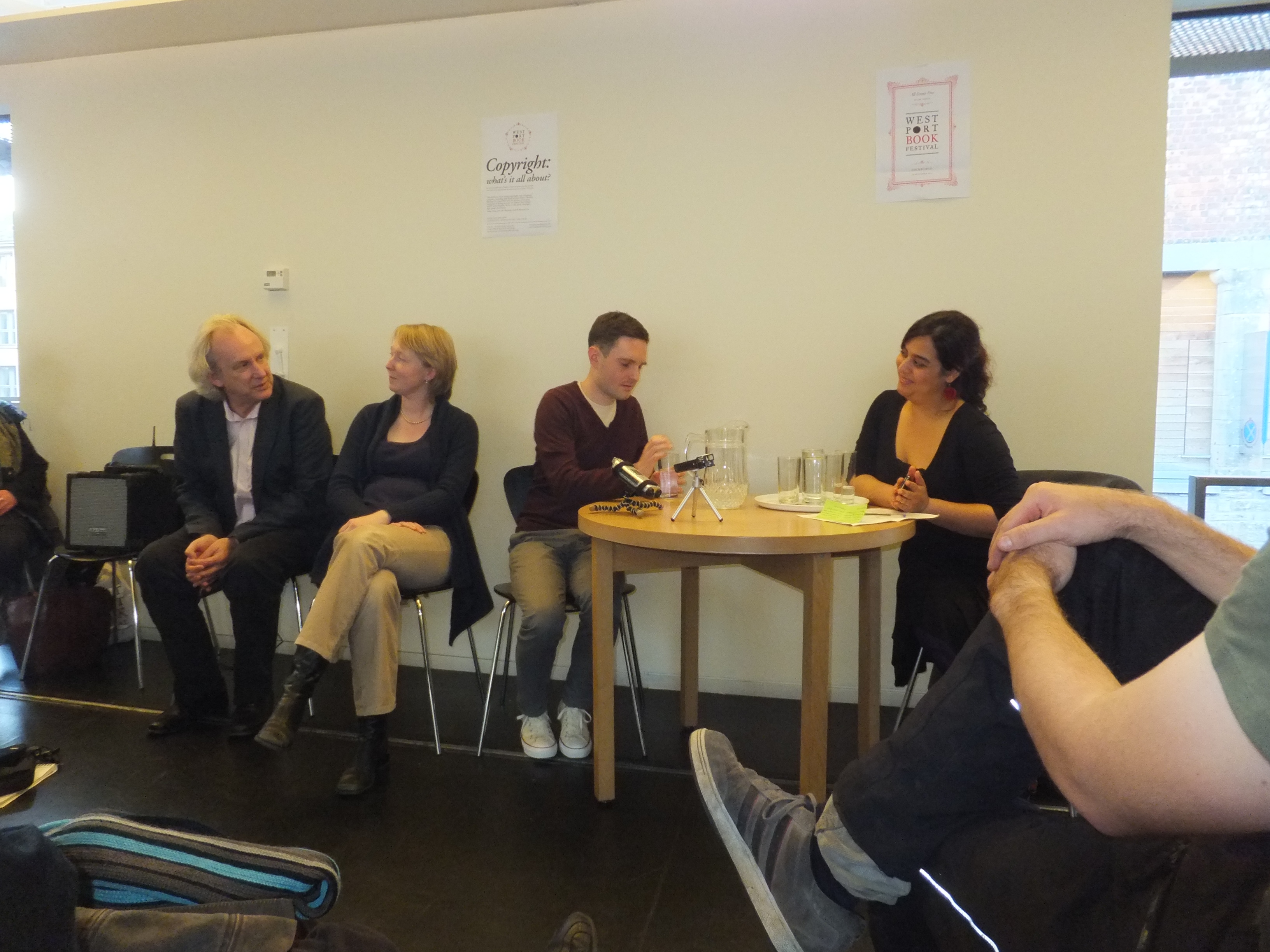
As part of Edinburgh’s annual West Port Book Festival, the Scottish Poetry Library hosted a 3 hour battle for “Copyright: What’s it all about,” on 16th October, with tea and cakes, well attended by media persons, library members, writers, solicitors, artists, content creators, and other publishing students.

Three distinguished speakers offered their points of view on copyright law, its history, and increasing relevance in these fast changing digitised times, locally and internationally. Dr. Padmini Ray Murray, Lecturer of Publishing Studies at University of Stirling chaired the panel.

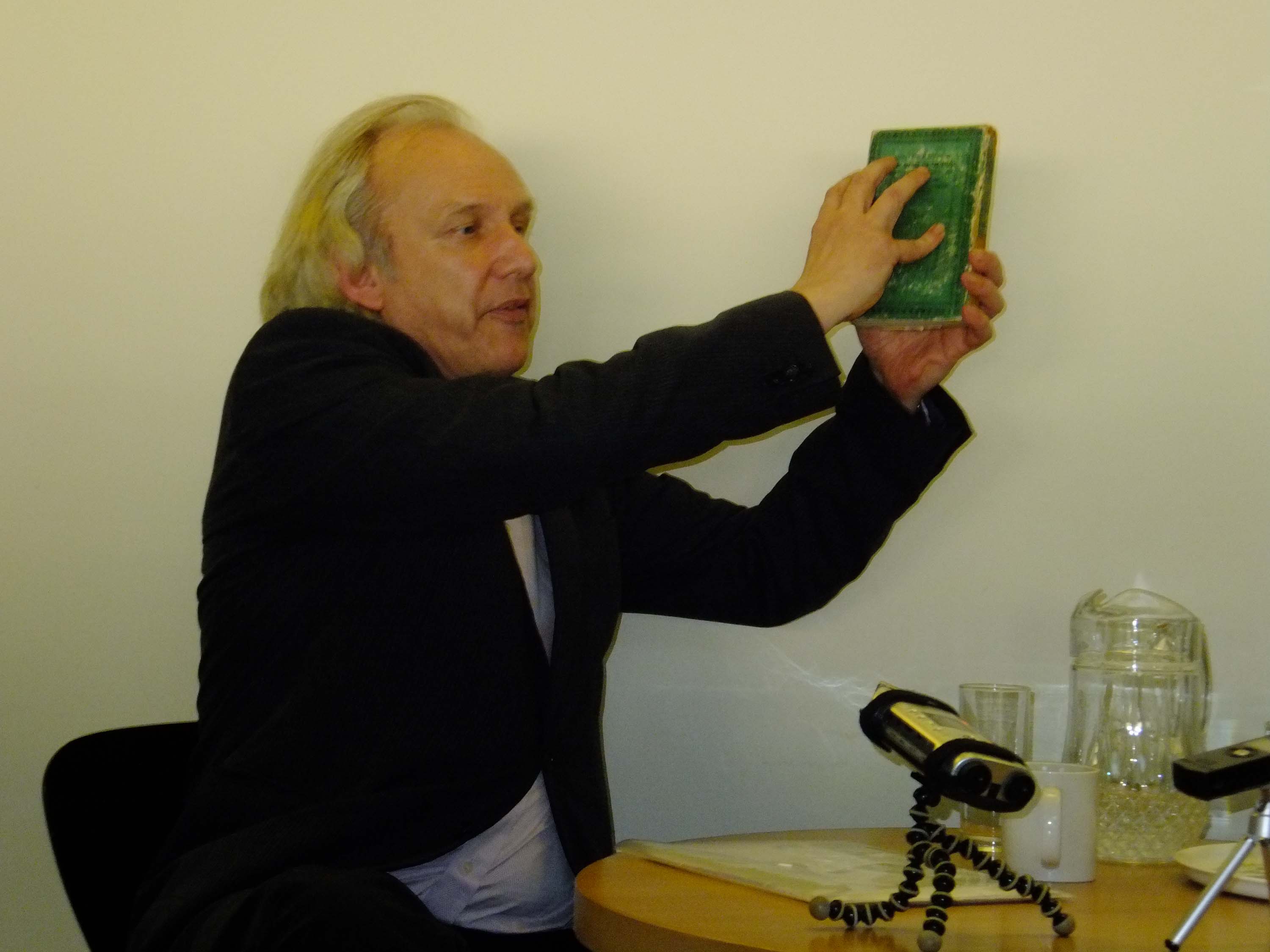
Dublin born Ronan Sheehan, began with a tribute to Columcille, the Irish saint who founded the monastery of Iona and declared “To every cow its calf, to every book its copy.” The case between Saint Finnian and Columcille illustrates finely the age old battle for copyright.  “There were 2 forms of utterance, by Poet and by the Judge. And when the Judge got it wrong, there was catastrophe,” ruled Ronan.  The speaker played devil’s advocate on several occasions, but host to the basic premise that photocopying and distribution is an infringement of civil rights, not a criminal offense to be dealt with by “policemen”. He clarified that there needs to be a law protecting authors, and that authors should actually donate part of their estate to the state in return for certain benefits, like tax exemptions.

Intellectual Property historian Dr. Aileen Fyfe gave historical perspective to copyright, in the 18th and 19th centuries and sourcing origins to the first British Copyright Act in 1709. Prior to that, only “pirates” printed certain titles— as they lacked the concept of public domain. In 1774, limited copyright emerged, whereby power to print most text was limited to a handful, and passed down to heirs. This led to a monopoly of certain titles and continuing  high prices attached to those works. Later, The Act for Encouragement of Learning exploited the copyright as much as possible towards the benefit of the common good.  At about the same time a huge amount of pirated books entered Scotland and Ireland.

Leading us into the nineteenth century, Fyfe explained that the strongest link to copyright and the author came about when copyright spanned the lifetime of the author.  Because of this, the estate for heirs could be cleverly planned. Longer term copyright was good for publishers because it led to a huge price differential between books within and outside of copyright, equal to almost the wage of a low income worker! Works in public domain could be reprinted cheaply, but more rights for authors did not help readers.

By the 21st century, the international copyright was implemented. It began with North America not recognising British copyrights. Initial copyright law offered protection to only books, not magazines, under the emphasis that public education and wide circulation were priorities within this sector. Authors like Charles Dickens were up in arms against British authors not being able to make any profits out of this siphoning of British literature. Aileen talked about life post the Berne Convention 1886, and broke up copyright into three distinct phases of perpetual copyright, greater possibilities in the 19th century with authors’ benefits, and finally USA’s agreement to put in place an international law.

The third panelist Stephen Taylor, a solicitor who advises clients on commercial copyright, talked at length about the Digital Economy Act which was passed last year. He quoted statistics of about 7 million people file sharing every year, costing the government several millions of pounds annually. The government has been under pressure, gathering industry insiders to pool solutions, but despite several memoranda having been drawn up, the actual implementation fares poorly. Stephen’s mention of the Digital Economy Act sparked interest in how the internet was stealing authorship, and how “cyberpirates” were all over the publishing world too. However, the initial protector of the net affluent client, the Internet Service Provider is now also its police, and can serve legal notices to clients in breach of the Act, with repetitious warnings leading to eventual prosecution under the proposed laws. He also mentioned Creative Commons, a nonprofit organization that increases sharing and improves collaboration, has pushed boundaries in public learning.

Questions from the audience flowed in plenty, answers milling with references to Disney’s sleight of hand in the business of kids’ entertainment. Ronan Sheehan recalled with amusement the Piggley Pooh case, wherein a woman from Co. Meath Ireland  had chronicled her life of growing up on a farm. Disney claimed that it held copyright of ‘Pooh’ (Winnie the Pooh) and the woman was denied use of the word in her title, which she had named after her grandmother’s pig! She did beat Disney, but only after several distraught years and expenses.

Padmini summarized the evening’s conversations with caution, “Writers should still hang on to their day jobs!”

National Novel Writing Month

November 3rd, 2011 by prm | Posted in Blog | Comments Off on National Novel Writing Month
Tags: , , , , ,

NaNoWriMo has begun!

In 1999, Chris Baty started a creative writing project in which participants attempted to write a novel of 50,000 from the 1st to the 30th of November. The project has grown from its humble beginnings of 21 participants in San Francisco to over 200,000 people worldwide.

Not everyone makes it to the grand total, which requires averaging 1667 words a day, but at least get a lot of writing practice in the attempt! Over the years the site has become ever better equipped to support those taking part with forums, pep talks, writing buddies and a word count scoreboard to add a competitive edge. The event is non-profit, relying entirely on donations. It encourages people who have always thought they would write a novel someday to make a real start which has meant a number of past members actually getting their novels published.

It is a positive example of how the internet has helped global creative communities form. It’s also not too late to join in this year!

Anna Keville

Opening Weekend at the DSC South Asian Literary Festival

October 27th, 2011 by Arundati_Dandapani | Posted in Blog | Comments Off on Opening Weekend at the DSC South Asian Literary Festival
Tags: , , , , , , , , , , , ,


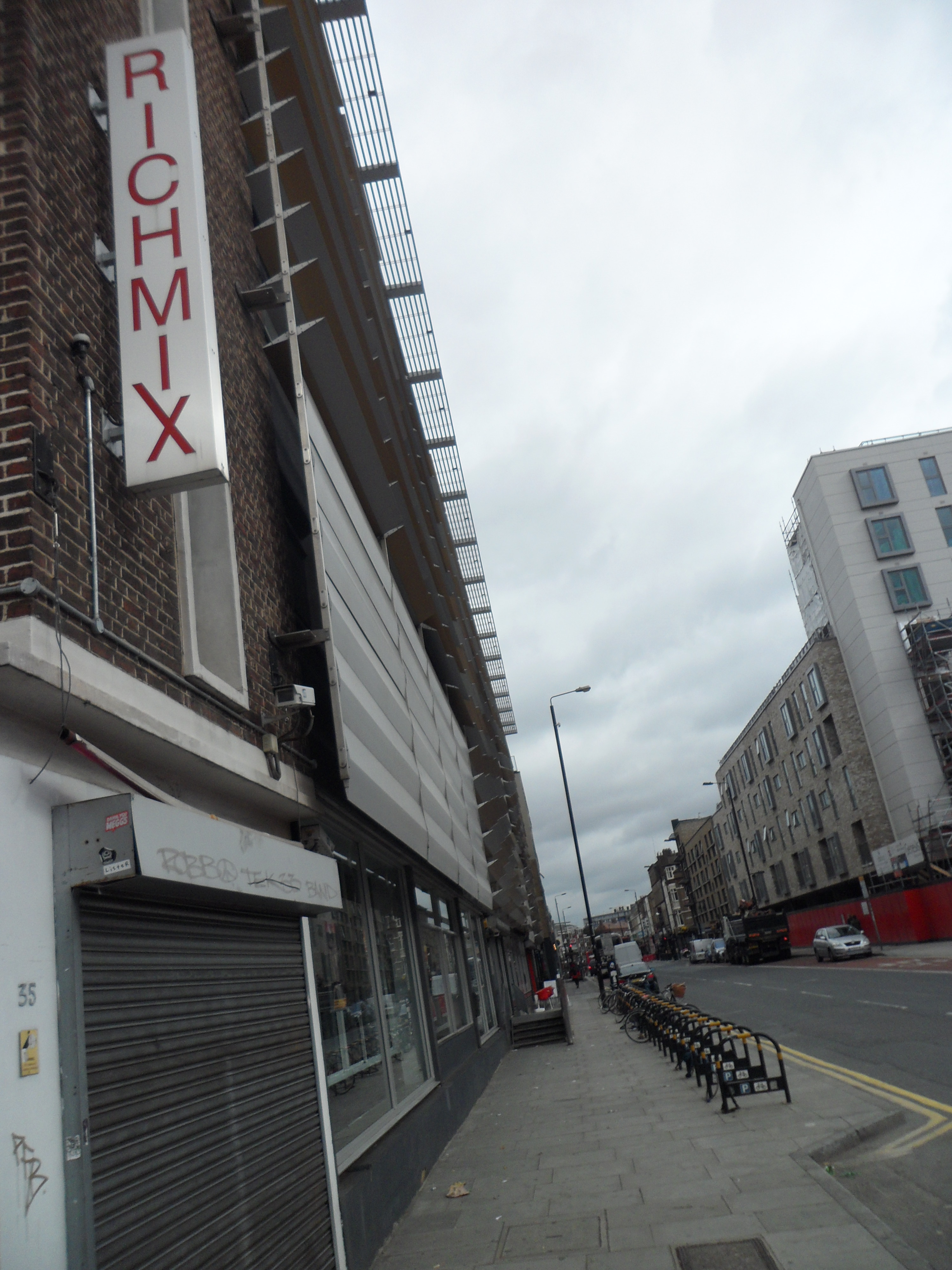
RICH MIX BOX OFFICE

The second DSC South Asian Literary Festival 2011 (SALF) kicked off on 07 October in Rich Mix, Shoreditch, London, drawing from themes of diaspora, migration, and identity. Visitors with pre-booked opening weekend tickets could redeem their money’s worth for books at the Brick Allen store on premises. Read more »