Blog

Publishing Scotland’s In-Company Development Project – First Seminar

October 5th, 2011 by Frances_Sessford | Posted in Blog | Comments Off on Publishing Scotland’s In-Company Development Project – First Seminar
Tags: , , , ,

The In-Company Development Programme is the brainchild of Publishing Scotland CEO, Marion Sinclair. It is an ambitious scheme designed to enable publishers based in Scotland to develop and grow their businesses in order to respond to changing consumer trends in markets at home and overseas. Seven publishing companies have been chosen to participate: Acair, Sandstone Press, Freight Books, Saraband, Strident Publishing, Floris Books and the Royal Commission on the Ancient and Historical Monuments of Scotland. The publishers will have three seminar days where they can view presentations from and meet with industry professionals; and they will also benefit from the services and experience of an industry expert who will work alongside each business, offering advice and input on issues such as publishing strategy, growth strategy, exploiting intellectual property, and financial matters.

On Thursday 29th September, the seven chosen publishers gathered for the first seminar in the company of their mentors, speakers and other guests from the publishing industry. David Pirnie, strategy consultant and programme manager, opened the session with a warm welcome and announced the focus of the first seminar: the business of publishing in the context of researching the market, managing change and seeking investment.

The first speaker was Reeta Davis of Nielsen Bookscan, who gave a master class in market research: what it is, where to get it from, why publishers need it and most importantly, how to make the most of the research you have at your disposal. The presentation included some valuable and detailed information about the current state of the UK market. Accurate, reliable, up-to-date research often has to be paid for; publishers have to ask whether it is worth their while. Spending £1000 on some detailed research which will enable you to better judge your print runs could save the business much more money in the long run.

Martin Redfern, one of the programme mentors, opened the next stage with a brief presentation on the challenges of managing change. In his opinion, small publishers are actually at an advantage when it comes to adapting to change: flatter management structures and simpler operations mean they can move more quickly in response to market needs than the clumsier corporates. This was illustrated in excellent detail by two fantastic case studies, presented by Vivian Marr of OUP and Jenny Todd of Canongate, respectively. The former showed a corporate giant’s struggle to move a large and successful list from print to digital, while the latter addressed the challenges which came to Canongate in the wake of one of their biggest successes: Life of Pi’s winning the Man Booker Prize in 2002. This was a particularly fascinating and illuminating part of the day: it is rare to be privy to the details of a publisher’s operations. Delegates were impressed. The conclusions: make your decisions, communicate them effectively and get people on board – a fractured operation responding to conflicting messages will not cope well with change.

Managing change effectively relies a lot on making a secure base, and finding investment is an important part of this. The only resource most publishers have in limitless quantities is enthusiasm. Donald Boyd, Head of Media at Campbell Dallas gave his advice on investment sources for publishers and, more importantly, assessing the potential risks and benefits involved. He urged delegates to reflect that while doing nothing with their business was an option to be considered, it is also the one to be left behind. However, if you are going to seek funding from an external source, you must be able to live with the consequences. While Donald Boyd pointed out that looking to conventional sources of funding for projects (such as banks) is virtually pointless in today’s climate, several of his existing clients have had some success in seeking funding by crowd-sourcing. This is one way in which publishers might be able to generate new resources in future.

Summary feedback from the attending publishers was extremely positive. While many of the delegates have no formal publishing training they have all learned the hard way about publishing through their trials, mistakes and successes. This session gave them time out to consider their businesses from fresh perspectives; to think about their options for growth and development; and to discuss plans and hopes with industry colleagues. Exactly how these businesses will change and develop is impossible to say, but this is an extremely exciting time not just for them but for Scottish publishing as a whole.

The New 52

October 3rd, 2011 by prm | Posted in Blog | Comments Off on The New 52
Tags: ,

This month DC, one of the big two comic companies in the US, have released The New 52. This is a relaunch of 52 titles, now all beginning with a new issue #1. DC’s senior Vice-President has called this “an epic and ambitious initiative that ushers in a new generation of comics.” This means well-known characters have been redesigned, many with new costumes and backstories inevitably leading to mixed reactions from fans.

The New 52 has given the company a chance to encourage new readers who may have been previously daunted by the complex backstories of the DC multiverse.

One of the most interesting debates the launch has sparked on the Internet is how DC may have wasted this opportunity to gain a greater female readership. They have reduced the number of titles with female leads and the new version of Batgirl has resulted in nullifying one of DC’s only disabled characters.

Hopes that DC would make more female-friendly titles have been largely disappointed. The new Catwoman and Red Hood and the Outlaws that has not only failed to interest female readers, but has actively offended many. Complaints have been that characters with great potential have been made into two-dimensional eye-candy. The changes made to the character of Starfire may be one of the worst decisions. The most popular incarnation of the character was in the children’s TV series Teen Titans but rather than taking advantage of its popularity, DC has done more to alienate fans of the show. Michele Lee’s blog did a particularly good job of demonstrating how poor a decision the character change was by interviewing her own 7-year-old daughter, a huge fan of the character.

Now that DC have hired Nielsen to survey readers for the first time, perhaps they will learn from their mistakes but considering how female comic fans have been pushing for better representation within the comic industry, they should not have those mistakes in the first place.

~ Anna Keville

Books make the world more real for us: Andrew O’Hagan on civic memory in Scotland

October 2nd, 2011 by Nuria_Ruiz | Posted in Blog | Comments Off on Books make the world more real for us: Andrew O’Hagan on civic memory in Scotland
Tags: , , , , ,

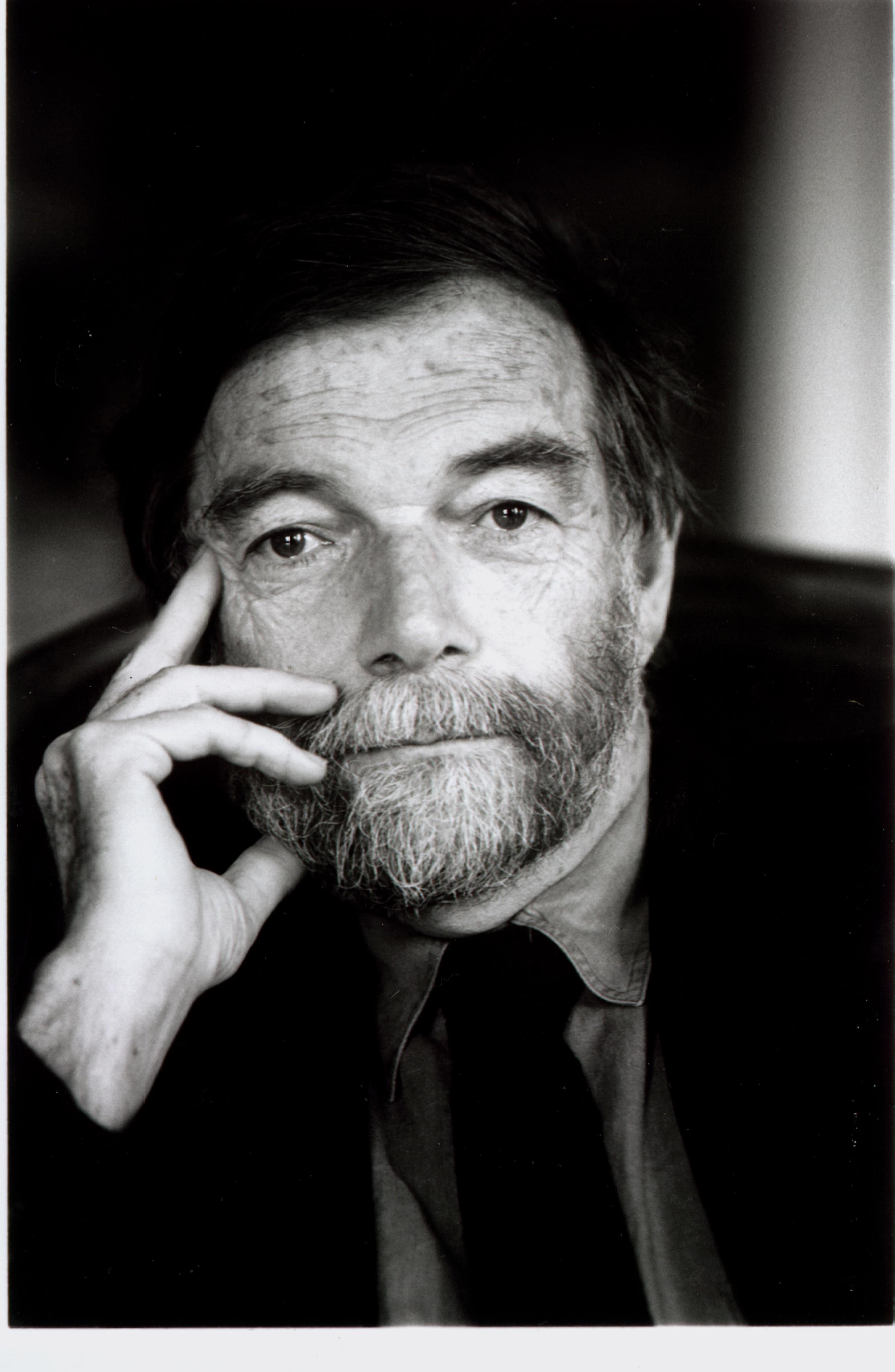
Photo of Andrew O'Hagan by Jerry BauerOn 28th September 2011, award-winning writer Andrew O’Hagan arrived in Stirling to deliver a lecture on civic memory, which he called “An Argument on the Character of Scottish Culture”.  In equal measures thoughtful and amusing, he explored how our understanding of Scotland, and our own place within our home country, is dependent on shared memories and a common culture.

 The lecture was held at the macrobert, as part of the House of Words series in collaboration with Creative Writing at Stirling.

“Scotland”, asserts Andrew O’Hagan, “is a living workshop of the imagination”.  And this was really the unifying theme of his guest lecture on the nature of Scottish civic memory.  We Scots are bound by our imaginations and our unending need to understand what has gone before.  Through the Bell’s Whisky tagline, “Afore ye go”, via an unexpected invasion by the English, to finally praising the Scottish “confederation of the imagination” between its authors and readers, Andrew led us through the creation of a Scottish identity that says as much about its citizens as it does about the continuing strength of its creative industries. 

As a writer, O’Hagan of course emphasised the role of writing in civic memory.  A lovely idea was his perception of the theatre as a vision for how to live, particularly when our lives are becoming politically and economically harder.  But it was the story, the power of fiction, which underpinned his argument.  Mentioning James Kelman, Andrew described his body of work as the most crafted and true representations of Scotland – and for me, it struck home.  Kelman, of course, won the 1994 Booker Prize with How Late It Was, How Late, stoking controversy with his use of Glaswegian language and culture among more traditional critics.  But in Scotland, his book was an invocation of who we are; it was our language, our experiences and anxieties, put into words where it could not slip out of view.

A noteworthy observation, purely from a publishing perspective, was O’Hagan’s idea that Scottish civic memory actually finds its most forceful expression in the arts – Scottish plays, music, art and books are becoming powerful, punching above their weight in the cultural stakes.  In particular, books are playing a bigger role in making the world “more real” for us as Scots.  This led me to question what that could mean for the publishing industry in Scotland.  It might be easy to assume that the home of literary and fiction publishing in Britain rightly lies in the South East.  But as Andrew noted, Scotland is a nation whose stories are largely unwritten, and where our personal fiction and characters are as respected as our national history.  We may for many years have lived a verbal life, but this creation of a civic memory could see our stories, and the stories of those who came before us, power the publishing industry.  If Scottish book culture is on the ascendant, then Scottish publishing can become as commanding as the stories it makes and preserves. 

And everyone in Scotland, after all, has a story.

Núria Ruiz, September 2011

Project Assistant for Book Cultures, Book Events research

October 2nd, 2011 by cs48@stir.ac.uk | Posted in Blog | Comments Off on Project Assistant for Book Cultures, Book Events research
Tags: , , , , ,

With funding from the Royal Society of Edinburgh, Professor Claire Squires (Director of the Stirling Centre for International Publishing and Communication) and Professor David Finkelstein (Queen Margaret University) will be running a series of events on the topic of literary festivals and live book events in 2011 and early 2012, including an academic conference and practitioner/stakeholder-focused events. Project assistance is sought for the following roles:

Research and Administrative Assistant for events from late October 2011-March 2012. 60 hours @ £15 an hour. Skills and experience needed for the position:

  • Aptitude for events organisation and administration
  • Knowledge of and interest in contemporary publishing, literature and creative industries
  • Experience and/or aptitude for research in areas relating to the project

Research Assistant for completion of report and other outputs March-April 2012.

  • 20 hours @ £15 an hour. Skills and experience needed for the position:
  • Knowledge of and interest in contemporary publishing, literature and creative industries
  • Experience and/or aptitude for research in areas relating to the project

The roles can be combined. The work pattern is part-time and flexible on negotiation with Professor Claire Squires and Professor David Finkelstein and some of the work can be completed remotely; however, the assistant will need to be within commuting distance of Stirling and Edinburgh for project meetings and events.

To apply, please email Professor Claire Squires claire.squires [at] stir.ac.uk with a cv detailing your relevant experience, and a covering email by 14 October 2012. If you require further information, please also contact Claire Squires.

Further Details

RSE Workshop Book Events: The Transnational Culture, Commerce and Social Impact of Literary Festivals

A significant development in the environment of literature and the book at the turn of the 20th and 21st centuries has been the growth of literary festivals and book towns. As part of the literary marketing mix, book festivals and towns offer publishers the opportunity to promote their authors and sell their products. Such locations also provide physical and sociological spaces in which readers encounter writers and literature, and become book consumers. Book festivals and towns have clear links to regional economies, and are heavily used in the promotion of tourist destinations, as testified by the strategic partnerships and sponsorship arrangements with a variety of agencies. In the era of new media and digital delivery, the opportunity to meet authors and fellow readers face-to-face, to buy books and other merchandise, and to align a liking for literature with travel and tourism, is being taken up by hundreds of thousands of readers every year. Literary festivals and towns, while heavily promoted by digital marketing activities, afford physical meeting spaces for authors, books, readers and ideas.

The project is funded by the Royal Society of Edinburgh and is run in association with the Stirling Centre for International Publishing and Communication at the University of Stirling, Queen Margaret University, and Bookfestival Scotland .

Breaking In and Standing Out

September 25th, 2011 by cs48@stir.ac.uk | Posted in Blog | Comments Off on Breaking In and Standing Out
Tags: , , , , ,

Suzanne Kavanagh of Skillset

A report on career advice from Suzanne Kavanagh, Visiting Speaker Semester 1, 2011-12, by Rachel Chase

Though Suzanne Kavanagh announced that her intention was to “scare” the publishing students at the University of Stirling on Thursday, September 22nd, she cleverly presented her material in a way that was more optimistic than frightening.

Suzanne works for a not-for-profit organization called Skillset. At Skillset, she supports individuals and businesses in the creative industries by offering them skills and training. She has been involved in the publishing industry for 16 years (specifically marketing) and she was kind enough to share her vast knowledge with us about making a career in publishing.

Though her presentation was not “scary” overall, it did have some frightening elements. Take, for example, the fact that sixty-seven per cent of the workforce in the publishing industry is over thirty-five-years-old (which is downright discouraging for anyone in their twenties who is trying to break in). In addition, the number of freelance editors has dropped and the number of people working in publishing has dropped significantly since 2007, due, in part, to the digitalization of books. In short, there are fewer jobs and more people trying to get in.

What does all of this mean for post-graduate students studying publishing at the University of Stirling? It means that things are tough, but not impossible. Suzanne emphasized that there is a shortage of sales and marketing skills among those who are trying to get into publishing. Editorial is not the only way to go, and, in fact, Suzanne suggested that getting into publishing through another door—say, marketing—is a good idea to break in.

Her lecture was very informative and I came away with specific areas in which I can improve my resume. Among the most important aspects for making yourself stand out are work experience (thirty-five per cent of the publishing workforce have done unpaid work), computer skills, specific software skills, and even math skills (though this fills many book-reading editor-bent students with horror—numbers matter!). The bottom line is that publishing is a business and unless a publishing house makes money, they cannot continue to publish the wonderful books that we love to read.

Thanks Suzanne for a great beginning to the list of fantastic visiting speakers lined up for this semester! If you want to learn more about Skillset, visit their website.

The Class of 2011-12 is here!

September 17th, 2011 by cs48@stir.ac.uk | Posted in Blog | Comments Off on The Class of 2011-12 is here!
Tags: , , , ,

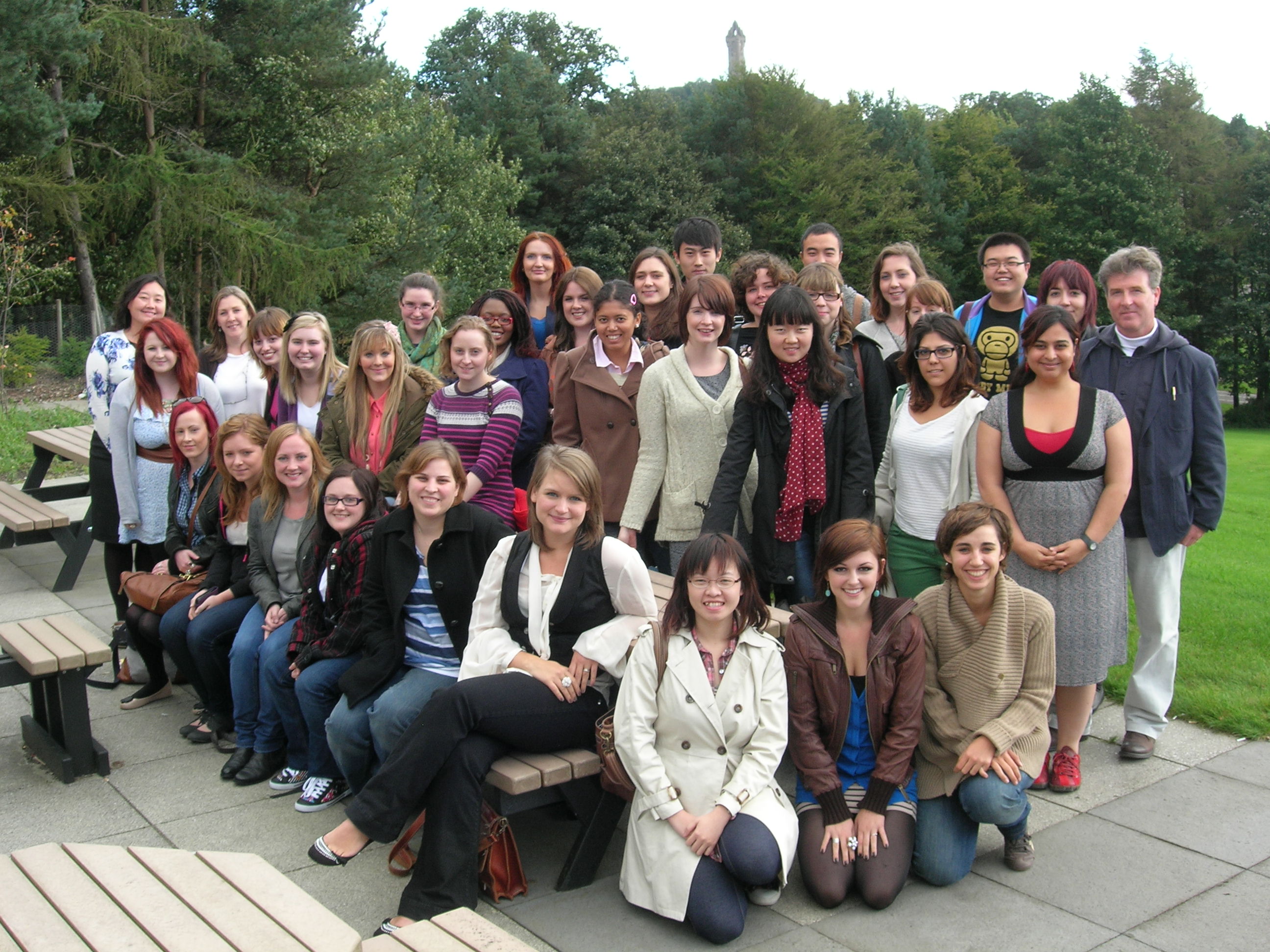
Every year, we welcome a new cohort of students to the Stirling Centre for International Publishing and Communication. Our students always come from far and wide to study with us, and this year is no exception. We have students registered across our three different masters programmes, the MLitt in Publishing Studies, the MSc in International Publishing Management, and the MRes in Publishing Studies, which can lead to a PhD in Publishing. They come from Scotland, England, Northern Ireland, Cyprus, Ireland, Italy, Latvia, Spain, China, India, Taiwan and the USA. We also welcomed back to Stirling several graduates from a range of undergraduate programmes.

In our first session students brought in publishing products from their home countries. There were digital devices aplenty, but also a great range of very high spec printed materials, including art and fashion magazines. We also had some very Scottish products: an Oor Wullie annual from Dundee publisher D C Thompson. It’s already clear we’ve got a class of students with divergent interests in terms of publishing products, but all united but their fascination for and desire to get on in the world of publishing.

We’re very much looking forward to working with them. If you think you might be interested in joining us next year – please get in touch via our Contact page!

Launch of Bloody Scotland

September 16th, 2011 by cs48@stir.ac.uk | Posted in Blog | Comments Off on Launch of Bloody Scotland
Tags: , , ,

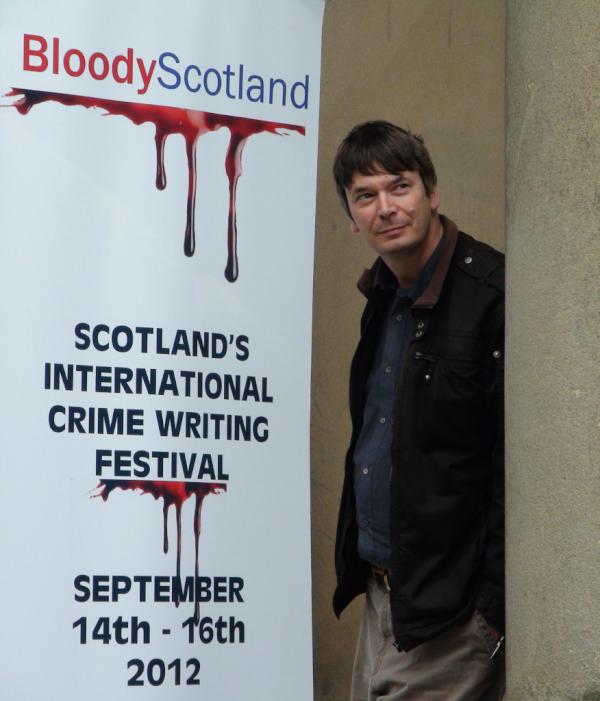
Ian Rankin at the launch of Bloody Scotland

A starry line-up of crime writers gathered in Stirling’s Smith Museum & Art Gallery today to launch Bloody Scotland, an International Crime Writing Festival which will take place in Stirling on 14-16 September 2012.

Writers in attendance at the launch included Ian Rankin, G J Moffat, Stuart MacBride, Anne Perry, Lin Anderson, Allan Guthrie and Craig Robertson. Ian Rankin took to the floor to applaud this, the first Scottish literary festival to celebrate Scotland’s most popular fiction genre. And to prove how Stirling is a perfect location, he revealed that his next novel reaches its finale here…

The festival has support from Stirling Council, Creative Scotland, and will work alongside Stirling’s existing Off the Page festival, which we reported on last week. Excitingly for us, the festival is also organised in collaboration with the University of Stirling’s Creative Writing courses and the Centre for International Publishing and Communication.

We’ll be working with Bloody Scotland on Creative Friday, hosting masterclasses, workshops, and a publishers’ and agents’ forum. More details to come… and don’t go down any dark alleyways in the meantime!

Visiting Speakers for Forthcoming Semester

September 15th, 2011 by Frances_Sessford | Posted in Blog | Comments Off on Visiting Speakers for Forthcoming Semester
Tags: , , , , ,

Stirling Centre for International Publishing and Communication hosts another great line-up of publishing professionals this semester. Our guest speakers are drawn from many sectors of the industry, including literary agency, retail, printing, distribution, trade publishing and digital publishing. The visiting speaker sessions give our students valuable knowledge of how different parts of the industry operate. As a highly technology- and consumer-driven industry, publishing is changing at the speed of light and our speakers can give up-to-the-minute insights into both how the industry is adapting to the challenges it faces, and how they as individuals are playing a part in this.

But first things first: how can you go about getting a job once you have your degree? Suzanne Kavanagh of Skillset will provide some guidance and information on this very subject on Thursday September 22. (Please note this session is for Publishing Students only, and will be held at 10.30am, not 2pm.)

The public sessions begin on September 29 with a talk by David Martin of Martins the Printers about how digital printing technology has radically changed the way books are produced. Switching to the other end of the production spectrum, Maggie McKernan, literary editor and agent will give a dual perspective from her career as both an editor and literary agent on October 6. The following week (October 13), Adrian Searle of Glasgow-based publishing imprint Freight Books will be speaking about setting up a publishing company in 2011.

Is there any truth in the suggestion that inside every publisher there is a writer struggling to get out? Well, if that’s the case with you then Dr Paula Morris of Stirling University’s new Creative Writing taught masters course will give you not only the author’s view of the publishing industry but also some tips on getting published as well (October 20).

After we get a chance to catch our breath at the mid-semester break, Jane Camillin of indie sports publisher, Pitch Publishing, will kick off the second half of semester on November 3 by talking about how publishing can be small yet successful, followed on November 10 by Liz Small of Geddes and Grosset/Waverley Publishing, a long-established Scottish trade publisher. Focus then switches to retail on November 17, with Eleanor Logan of Chapter Twenty independent publishing retail consultancy giving the bookseller’s perspective on these interesting times, and our penultimate guest on November 24 is Marion Sinclair, course alumni and Chief Executive of Publishing Scotland, the representative body of Scottish publishers. The program closes on December 1 with Simon Meek of Tern TV on digital adaptations of well-known books.

Don’t miss any of them! Attendance at all visiting speaker sessions is free but there is limited space so please register via publishing@stir.ac.uk to book a place. All sessions will be held at 2pm in Pathfoot B2.

Stirling Book Festival in its Sixth Year

September 7th, 2011 by Frances_Sessford | Posted in Blog | Comments Off on Stirling Book Festival in its Sixth Year
Tags: , , ,

Stirling’s own book festival, Off The Page runs from 10–17 September (see full listings and venues here). Now in its sixth year, Off The Page boasts a fantastic track record of showcasing the rich writing talents of authors and poets from the Stirling area and beyond. The week-long festival is run in partnership with Creative Scotland, the country’s arts investment engine and provides an eclectic mix of speakers, readings, music and exhibitions. And for the first time ever, the festival this year hosts an evening of Gaelic music and storytelling.

Top names coming to show and tell include contemporary novelist Christopher Brookmyre, crime fiction writer Caro Ramsay and travel writer Gavin Francis. One particular highlight (for me anyway) will be The Mental Feast of Pure Delight, an hour in the company of the wonderfully weird Robert Ritchie, Stirling poet and chair of Stirling Writers Group (meets at 7.30pm every Tuesday at The Tolbooth). The event is on at the very silly time of 12 noon but seeing as it’s the day before the course begins (Tuesday September 13), you’ll be free to go along. Another event worth mentioning is the launch of a book in aid of Stirling Mental Health Charity, AiM. Presented by Dunblane’s first lady of poetry, Helen Lamb, accompanied by Alex Nye and Trisha Smith, ‘these gripping tales aim to break down barriers and challenge some of the stigma still associated with mental health.’ So there. And it’s free: Wednesday September 14 at 7.30pm. You can go to the pub to chew over the first day of the course afterwards.

The City Crime Evening features Dumbarton-born and multi-award winning author Stuart MacBride plus Scots journalist Craig Robertson, who has been just about everywhere and done just about everything. Including writing a bestseller. Sheegh.

And last but not least, if you want some early insights into what keeps authors motivated (or if you are harbouring your own dreams of bypassing the slush pile), get along to How To Get Published (Sunday September 11, 1pm)where lots of people who know a thing or two about it will keep you right. Hachette Scotland publisher, Stirling alumni and course visiting speaker Bob McDevitt is chairing the event and would be delighted to meet members of our new cohort. And really, really last, don’t forget the Literary Quiz at The Tolbooth on Friday September 16 at 6pm. Stun your new-found friends with your literary knowledge! Or just sit quietly.

You might bump into some Centre staff at some of the events, and it’s a great chance for new Publishing students to get in a bit of local culture and a few light ales.

André Schiffrin, Visionary Promoter of Independent Media

July 22nd, 2011 by cs48@stir.ac.uk | Posted in Blog | Comments Off on André Schiffrin, Visionary Promoter of Independent Media
Tags: , , , , ,


Andre Schiffrin (photo credit Micheline Pelletier)

Never before has the control of the global conglomerates over the publishing, media and culture industries been under such scrutiny.

With Publishing Scotland, we present an event on Monday 22 August at the Edinburgh International Book Festival which goes to the heart of this debate.

André Schiffrin, the speaker at the event, was the Director of Pantheon Books for almost thirty years, bringing authors including Pasternak and Foucault to an American audience. His landmark 2000 publication The Business of Books expressed his belief that Western publishing was in a crisis, fuelled by the concern that the five largest conglomerates in the US controlled 80% of the books produced. His belief that this profit-driven industry prevented him from publishing books propelled him to resign and set up the non-profit New Press.

In his new book Words and Money, Schiffrin builds on his earlier arguments by focusing on the crisis in the general media, examining the European market to illustrate how the US corporate model has influenced practice worldwide to the detriment of serious journalism. He proposes measures to safeguard the future of publishing, bookselling and the press.

In this timely intervention into conglomerate ownership practices and philosophies, and what can be done to counteract them, Schiffrin will give a presentation and then open the floor to questions from the audience.

For further information and to book your place visit the Edinburgh International Book Festival website.

The event is organised by the Stirling Centre for International Publishing and Communication in association with Publishing Scotland and the Scottish Universities Insight Institute Independent Publishing Programme of Enquiry.