Blog

Aidan Moffat and the Lavender Blue Dress

November 17th, 2014 by Lara Gascón | Posted in Blog | Comments Off on Aidan Moffat and the Lavender Blue Dress
Tags: , , ,

91NsDWXgjpL

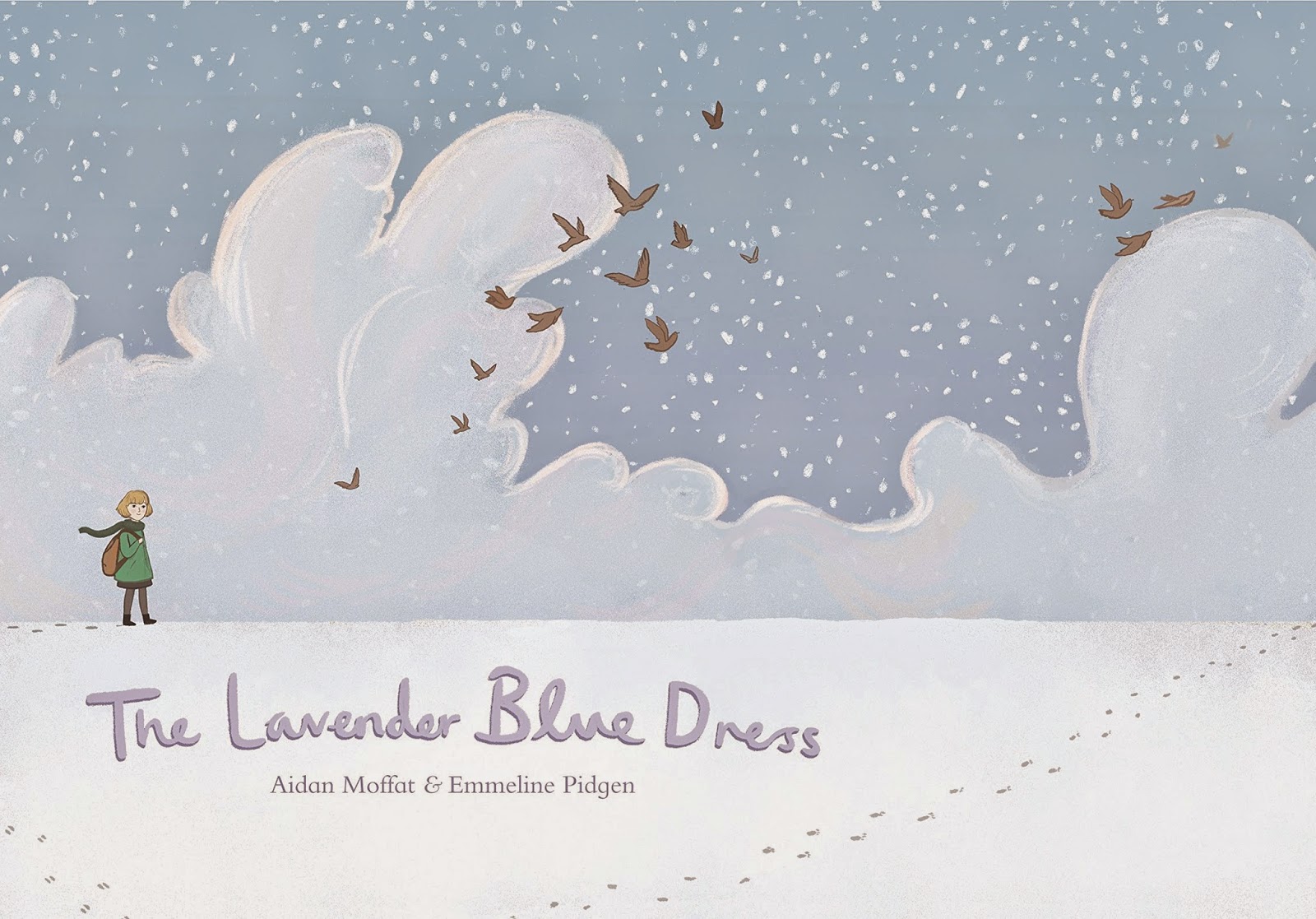
On Saturday November 15th, the acclaimed Scottish singer-songwriter Aidan Moffat was in Waterstone’s Bookseller located at Stirling Thistle Marches Shopping Centre as part of the promotional tour of his first children’s book, The Lavender Blue Dress. It has been published by Cargo Publishing in time for Christmas so if you lack of ideas, this books could be a nice present for young children. The book is beautifully crafted with art by award winning illustrator Emmeline Pidgen and a removable double sided dust jacket with a ‘cut out and play’ paper doll. The book also includes a CD with the book read by Aidan and music by Bill.
OLYMPUS DIGITAL CAMERA

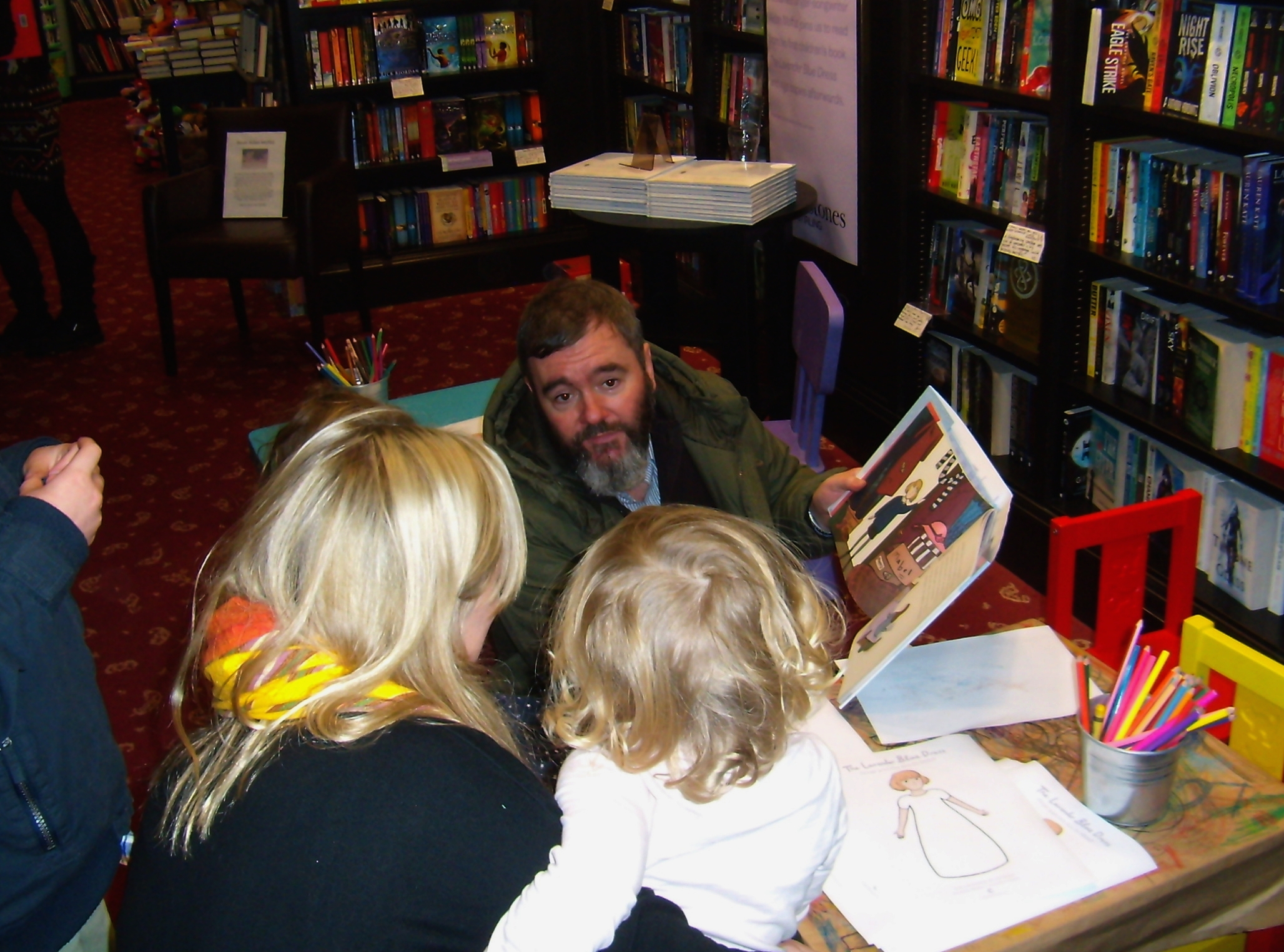
The event started at 3pm and finished twenty minutes after. Even if it was not the most crowded book launch event I’ve ever attended, Moffat approached the few children that were in the bookstore, getting down to their level by setting on the floor. Then, he started to read the book. The kids listened to him, completely, attentively and in silence. There was a little girl that seemed particularly captivated bythe author’s words; eyes wide open, looking at the illustrations of the book while she played incessantly with the curls of her blond hair.

???????????????????????????????

After the reading, the author got up and went sitting on a chair for signing copies of the book. Most of the people that were queuing were fans that bought the book because they wanted to have the opportunity to talking with the composer. The rest were parents that offered the book to their kids, but also wanted author’s signature and dedication. And the fact is that, as usually happens, the author’s personal brand seams to attract more customers than the book itself.

Even if Aidan Moffat is a long way from celebrities that are launching children’s books with the help of ghost-writers, is undeniable that being previously known as a singer catches the attention of future readers. I myself wanted to know more about what could have been the result of this book after knowing that the author was best known for writing songs about sex, drugs and death. “So please just ignore all the moods and the maybes, lift up your skirt and I’ll fill you with babies”, sings the singer that is writing for kids.

However, Aidan has crafted a sweet and heart-warming tale of family, friendship and the really important things in life. But he didn’t do it alone. Moffat told the media that the story was based on a tale he heard as a child:

The Lavender Blue Dress is a story my grandfather used to tell me and my cousins,” he said. “I used to spend every weekend at my grandparents’ and it was a story he told regularly. A few years ago I wrote it down and put it together as a story which I occasionally read live at gigs. I don’t know where my Papa got the story – I think he made it up. It was very simple and I’ve embellished it a bit.”

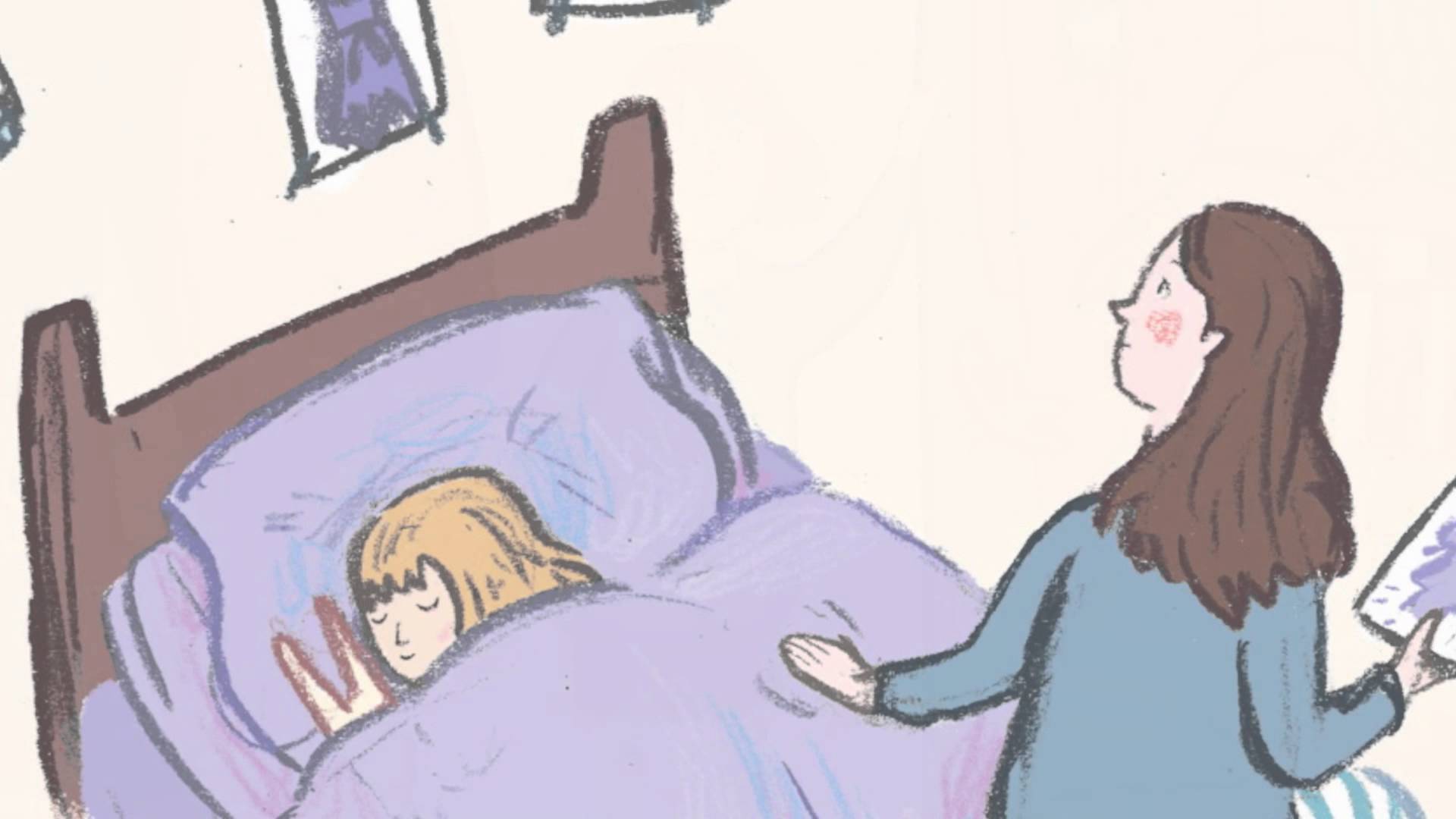
The Lavender Blue Dress tells the story of Mabel, a little girl who wants nothing more than a beautiful dress to wear to the Christmas ball. The crux of the story is that the family can’t afford the dress in question so they make it for the girl. As the author explains, it’s very much a story about love, and about love being more important than material items.
maxresdefault

You can view the teaser trailer here:

https://www.youtube.com/watch?v=46ImRXMQP7I

Moffat says that he would like to publish further children’s books if The Lavender Blue Dress is well received, there’s a second one that he has finished and he has ideas for a couple more:

“The second one is about how to cope with your parents arguing, which I can imagine is something
every child has to deal with.”

Personally, I really like the moral background of the book. I have always thought that children’s books are a basic tool to teach and reinforce kids’ essential values as sharing, helping, being kind…And as I could confirm, Aidan Moffat can transmit this ideas in a charming piece, with catching and lovely illustrations that bring author’s words to life.

Source: Cowing, Emma, “Arab Strap singer Aidan Moffat pens children’s book”, The Scotsman, http://www.scotsman.com/lifestyle/books/arab-strap-singer-aidan-moffat-pens-children-s-book-1-3191767, November 17, 2013

Visiting Speaker: Dr Simon Frost, Bournemouth University

November 14th, 2014 by Sarah Boyd | Posted in Blog | Comments Off on Visiting Speaker: Dr Simon Frost, Bournemouth University
Tags: , , , , , , , , , , ,
Simon FrostAs an extra addition to the Visiting Speaker series, Dr Simon Frost, Senior Lecturer in English at Bournemouth University, came to talk to us about his current research project. Entitled ‘Private Gains and Retailed Literature: Pathways to a Sustainable-Economic Account of Reading‘ (though Frost pointed out that his subtitle keeps changing!), this ambitious project is being undertaken in association with John Smith’s, the higher-education bookseller familiar to most students for their on-campus shops.
It’s probably worth mentioning at this point that Dr Frost’s project is quite a complex and, in some ways, esoteric one and that it is very much ongoing and developing, so at times it became a little difficult to take on all of the information he was conveying. The seven-and-a-half pages of notes I took during his presentation are testament to this! However, I’ll do my best to cover what he had to say.
First, Dr Frost outlined the aim of his project, to produce a defence of literature (the project is focused on fiction) in economic terms, rather than the cultural terms in which arguments for literature’s value are usually expressed. This was one of the trickier ideas to get our heads around but Frost put it in layman’s terms, saying that he’s trying to find out why a customer would choose to buy books, rather than booze! Essentially, his belief is that pointing to literature’s cultural importance does not mount a strong enough defence for the funding and resources allocated to it and that we require a discussion that engages with the economics of literature in sustainable terms or, in other words, attempts to discover what readers gain from the books they buy in more practical terms.
We then looked at the structure of Frost’s project, which is organised into three ‘threads’:
  • ‘theorisation’ – produce a model of how readers gain from books, bridging the literary and economic by investigating the idea that books meet intangible needs for readers.
  • ‘tuition’ – a number of students will be involved in the research for this project, particularly in compiling the results of an extensive survey, aiming for 750 completed surveys.
  • ‘professional practice’ – working in conjunction with John Smith’s, examine the shift from ‘bookseller’ to ‘book-based supplier of solutions’, in particular the move to provide new services based on outcomes/gains.

John Smith's BooksIn order to explain how he became involved with John Smith’s, Dr Frost gave us a potted pre-history of the current bookselling situation in Britain. John Smith’s has been around since 1751, so it has survived and responded to the major changes that have happened in the bookselling industry over the last several centuries, from the 1899 establishment of the Net Book Agreement (NBA) and its encouragement of dedicated bookstores, to the collapse of the Agreement in the 1990s which led to the downfall of almost all chain booksellers on the British High Street. More recently, the rise of online bookstores (themselves largely a result of the NBA’s collapse) has forced John Smith’s to rethink its business, as Amazon and its ilk have disrupted the traditional tutor-student-campus bookstore relationship. Their response has been to stop thinking of themselves as ‘booksellers’ at all and instead re-brand as a provider of solutions for students and Higher Education (HE) institutions. Indeed, their website is tagged as ‘John Smith’s Student Store’, with no reference to bookshops at all.
In effect, this has resulted in John Smith’s working with HE institutions to provide students with all the resources they need to successfully enter, negotiate and exit higher education. Their Stirling store, for instance, lists 15 departments, providing products from art supplies to bikes, mobile phones to university-branded clothing. They are no longer thinking about how they can sell the most books to students but about how they can meet all the needs that students might have, how they can become the main provider of solutions to students’ demands and problems (as well as aiding HE institutions to meet their outcomes). In this way, their rethinking of their business model fits neatly with Dr Frost’s project, as it relocates books as one part of a service that anticipates and provides everything that students will gain from appropriating. So, a copy of ‘Mrs Dalloway’ is no longer just a tool for education and cultural influence but also a product that can be analysed and quantified in economic terms.

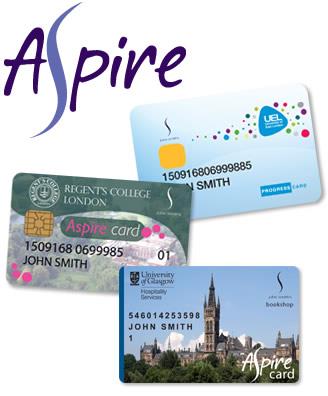
aspireFor the final part of his presentation, Dr Frost went into more detail about how the relationship between students, their HE institutions and this new incarnation of John Smith’s works. An essential part of this is the distribution of bursaries to students in England (introduced as a mitigating response to the raising of tuition fees). Universities receive a sum of money from the government and parcel this out to selected students in bursaries, often around £300, which are intended to widen opportunities for students from low-income backgrounds (and, ideally, to be spent on university-related goods and services, rather than down the pub, though we did have a discussion of whether or not the social environment provided by pubs – and cafes, equally expensive though perhaps less stigmatised – is a valuable part of the university experience!). John Smith’s have become involved in this process via their ‘Aspire‘ smartcard, which can be pre-loaded with the bursary money and limits what it can be spent on. This allows for a number of interesting features, from each card being tailored to its recipient’s needs, to facilitating data gathering and feedback to the institution. Of course, as several members of the class pointed out, this has some moral and legal implications, particularly with regards to privacy (the idea of tutors being able to keep tabs on whether you’ve purchased their reading list or not is more than a little Big Brother!) and this is an area that Dr Frost will be looking into as his study develops. At the moment, though, his main questions in this area are:

  1. Is the diversity of purchasing agency (i.e. those involved in the process of purchasing) now so great that it produces a break from the linear rational-choice model of purchasing?
  2. Do the limits imposed by the ‘Aspire’ model constitute an interruption of free will or free exchange? They limit the convertibility of one resource to another (the bursary can be turned into books or bikes but not beers) but do they also limit free choice? Such limits are common in the public world but how do they function in the semi-commercial and commercial spheres?
It was fascinating to hear about a project still in progress, with Dr Frost acknowledging that he is still in the process of gathering information and developing the theories and concepts that will form his ultimate conclusions. His observation that his ‘inner critic’ was working even as he spoke was one that I – and I’m sure most of us – identified with, but it’s reassuring to know that the pros suffer too. It was also great to feel that he was genuinely interested in our responses and in engaging in conversation with his audience – it’s always encouraging to feel that we’re being taken seriously by people already working! I’ll be interested to see the results of his project and how it shifts and develops as it progresses.

Lectureship in Digital Media and Publishing

November 14th, 2014 by cs48@stir.ac.uk | Posted in Blog | Comments Off on Lectureship in Digital Media and Publishing
Tags: ,

We’re very sad to announce that Dr Padmini Ray Murray will be leaving us at Christmas (for a post in India on the teaching faculty at the Centre of Public History at the Srishti School for Art, Design and Technology in Bangalore). We’ll miss her greatly, but we’re sure future collaborations will ensue.

That said, we’re happy to be announcing a vacancy for a Lecturer in Digital Media & Publishing, to teach and research both in the Stirling Centre for International Publishing and Communication, and also in our Division of Communications, Media and Culture.

Full details and the job specification are available from here. Please do contact our Director, Professor Claire Squires, if you’re interested in informally discussing the role.

Simon Appleby on Digital Marketing

November 10th, 2014 by Jennifer Katherine Hamrick | Posted in Blog | Comments Off on Simon Appleby on Digital Marketing
Tags: , , ,

SimonApplebyThe fifth speaker on our Visiting Speaker Series is Simon Appleby, director of Bookswarm—a digital project agency which specialises in the publishing sector.

Simon joined the world of publishing through his self-taught experience and expertise in web development. Originally working for various companies as a project manager in sales, he began teaching himself coding and web creation during the ‘dot com boom’. Working at Lateral, an agency which worked closely with publishers, Simon began to build a strong network within the publishing sector and eventually moved on to Octopus Publishing as Digital Project Manager. There, he became involved in digitally converting print to ebooks and creating apps which acted as digital accompaniments to various print projects. In his spare time, Simon worked in his ‘bat cave’ on creating the online literary magazine BookHugger. Eventually, BookHugger turned into Nudge, a variety of publishing-related websites, and from here, Simon moved on to launch Bookswarm.

Bookswarm offers services such as website design, print design, eBook design, brand creation and development, and author video production to a number of clients including Octopus Publishing Group, Faber, Hodder & Stoughton and Gallic Books.

According to Simon, it is now much easier and cheaper to create websites for digital marketing. Below are some of his tips and tricks for making the most out of digital marketing:

  1. In digital marketing, the creative idea is more important than the technology used to produce it: start by creating good content rather than simply trying to make something viral. Digital marketing is all about making content compelling for your audience.
  2. Many digital marketing sites allow content to be embedded in other areas, including the publisher’s own website; it is simple to keep your sites up-to-date by embedding social media feeds.
  3. It is important to keep up with trends in digital marketing (for example, memes) in order to keep content fresh and appealing.
  4. Think carefully about how you invite reader engagement. You can’t assume foot-traffic or participation which can create gaping holes where you expected content to be.
  5. In a multi-device universe, be aware of the limitations of various user platforms; not all devices have keyboards for example. Also, make sure your sites work with different screen sizes.

Simon highlights some of the following sites as easy-to-use digital marketing platforms and includes unique ways to utilise them:

  1. Twitter— can be used to rejuvenate older content.
  2. Vine— these six-second clips can be used for fun author/title promotions. For instance, Saraband has used Vines to animate their books covers.
  3. Videos (e.g. YouTube)— Simon cautioned us about book trailers because you need to put a lot of thought into their content and execution. Plus, you need to make sure it gets lots of foot-traffic, otherwise it is pointless.
  4. Flickr— a great repository for your visual material.
  5. SoundCloud— an easy place to put up your audio material.
  6. Infogr.am— infographics are easy to create and make content visually appealing.
  7. Creatavist— multi-media project creation and management tool for writers and publishers.
  8. Reddit— social networking service with various online communities.

SimonAppleby

Simon, who works with many authors in digital marketing, gives the following advice to publishers for author marketing:

  • Be aware of how much your authors want to be involved in online content creation and marketing; some are masters at blogging while others want to be left alone to write their novels.
  • You need to be clear whether you are focusing on promoting the author or their title/series.
  • An author’s website should extend their brand and meet audience expectations.

In terms of publishers’ own websites, Simon suggests the following:

  • First, get a clear idea in your head about what your website’s main function is: is it to sell books? To publicise? Promote? Engage? What?
  • Don’t assume your audience is only concerned with your books; engage with lots of different cultural and trade issues that will extend your brand and invite more interest.
  • Think about where your content will come from: authors, users, social media, ect.
  • Decide whether people can buy products directly from your site or whether you will direct them to other retailers such as Amazon.


Simon’s pathway into publishing not only demonstrates how many diverse roles are needed in publishing, but also shows how essential digital marketing has become in an internet-dominated age. Simon’s message is very positive for those who shy away from technology: there are easy and dynamic ways to engage with digital media and marketing. With great content, you only need to know some online basics to create a fantastic digital marketing campaign.

The Electric Bookshop birthday party

November 5th, 2014 by Paula De Lucas Gudiel | Posted in Blog | Comments Off on The Electric Bookshop birthday party
Tags: , , ,

B0F7SsXCQAAz8GZOn Thursday, October 16th was the 4th birthday of the Electric Bookshop. They celebrated it with an event in Edinburgh in which attendants could enjoy wine, cupcakes and three wonderful speakers. At the beginning of the evening, the members of the organisation of the Electric bookshop, Claire Stewart, Peggy Hughes and Padmini Ray Murray, discussed what their favourite moments of the year were. Primarely, for new comers as me, this was very helpful to know more about what they focus on. The organisation holds events to congregate people from various fields: technology, publishing, design and literature. As intimidating as this mixture might sound, they can be proud for having a big participation in their debates.

B0F80beIcAEWLOxThe first speaker to participate was Kate Ho, Managing Director of Interface3, which designs and exciting customer branded experiences using innovative technologies (such as Augmented Reality, Mobile Games). At the moment, Kate Ho is focusing on educational games, and she spoke about her project Stobhill, a 3D interactive experience based on Edwin Morgan’s poem with the same name. The game is set in a scary abandoned hospital that shares the name with the title. The players are supposed to use the audio of three people and their stories related to the building to work on their achievements in the game, and so find about the disturbing plot and terrorific resolution.

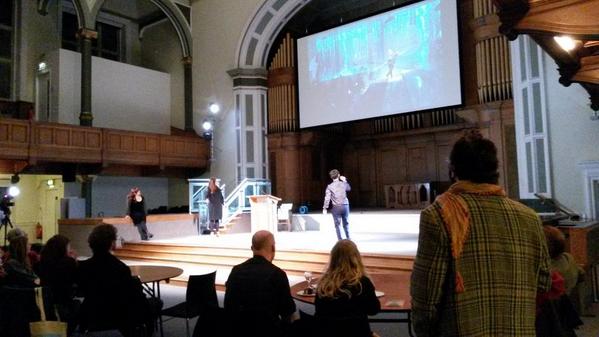
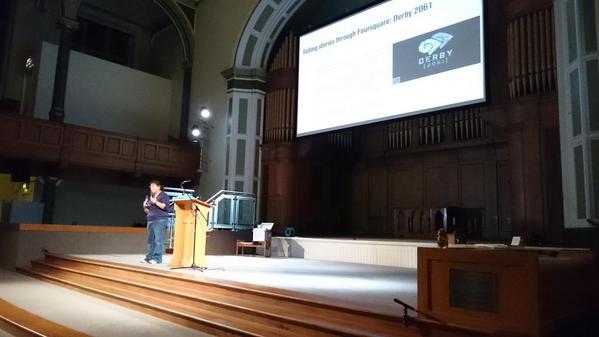
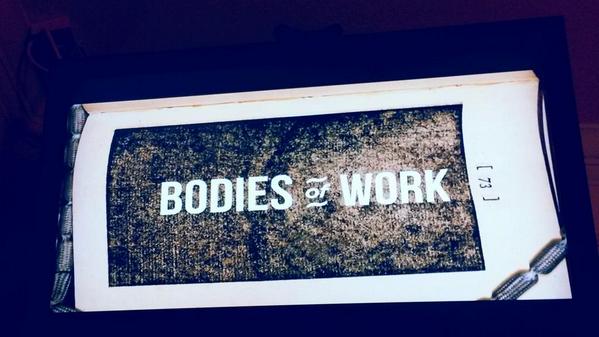
B0GG7KPCUAAsKGMThe second speaker who took part in the event was Alan Trotter. He is a writer from Aberdeen, winner of the Sceptre Prize for emerging writers and currently studying his PhD in University of Glasgow, researching for his project called Bodies of work: unusual uses of the physical form of the book. His work is characteristic for his study on the difference between printed text and text on the screen (HTML). In his participation, he talked about the play with form and this web-experiment he is working on.

The last speaker in the evening was Rob Morgan. Unfortunately, he couldn’t attend the event physically, but when the venue is organised by technology geeks, there’s always a way to sort out difficulties, so we could enjoy of his participation through Skype. Rob Morgan is a game writer, narrative designer and voice director. His participation was about the control and content of the player in a videogame, since this is very different from those in books. Fielectric-logo2rst, he discussed how the player interacts in the game, how he can control the story and the plot, but also how some games don’t give the player any choices to develop the plot in the game. Regarding the content of a game, he also explained how to create characters that the players can be identified with, how to make it exciting and interesting so the player can work on the development of the character, since he is the one in control of the storyline in the videogame.
This event clearly brought together different fields that, actually, work together most of the times. At the same time, it also was enlightening to learn more about how technology, set in the modern world, and literature, existing since ancient ages, come along so well together.

Marion Sinclair, Publishing Scotland

November 4th, 2014 by Emma Margaret Brown | Posted in Blog | Comments Off on Marion Sinclair, Publishing Scotland
Tags: , , , ,

­The fourth speaker to come and visit us this year was Marion Sinclair, Chief Executive of Publishing Scotland.

Marion Sinclair Source

She spoke to us about the overall state of publishing in Scotland and shared her perspective on the future of the publishing industry. She also shared a few stories about some of her early experiences working in the publishing industry. After graduating from the University of Stirling from this very same Publishing course (albeit, by her own admission, a number of years ago!), Marion’s journey in publishing began in a bookstore in Glasgow. One of her tasks was to sandpaper and polish down the covers of books that were to be returned to the publishers. Not exactly a glamourous start to a career! Yet Marion moved on from there to become one of the most prominent figures in Scottish publishing. Marion’s attitude towards publishing was wholly positive, telling us that by being on the MLitt we “are doing the right thing to get into publishing”.

After sharing some of her own experiences, Marion spoke about where Scotland currently stands within the larger publishing world. Marion shared that the Scottish Publishing industry is worth somewhere in the region of £350m, which, to help put this number in context, is the same value as the cashmere and smoked salmon industries. She stated that around 3,000 new books are published each year in Scotland alone, not including reprints or new editions. Publishing Scotland employs around 1,700 people directly and employs countless others indirectly. It should be noted here that these figures are rough estimates as trying to get the actual statistics on creative industries in Scotland is rather difficult. This difficulty is due to the very nature of the publishing industry, along with the problem of defining what counts as a publisher and what does not.

On the subject of publishing in Scotland, Marion shared that the very nature of Scottish publishing is that it is a niche market. But does this status as a niche market mean that if you publish in Scotland you need to identify as a Scottish publisher? It seems as though many of the larger houses avoid Scotland for this reason. Marion spoke about how there seems to be a pull towards London: many authors are drawn south sooner or later and major names in Scottish publishing sometimes leave to join the larger houses. Marion also mentioned the ongoing debate of whether being labelled as a ‘Scottish’ publisher is a good or a bad thing; it seems that the label can have both positive and negative effects for publishers. But as Marion said in her presentation, publishing has become a part of Scottish culture, particularly in Edinburgh, where “print and publishing go hand in hand”. The sheer size and volume of participants in the Edinburgh International Book Festival (to name just one of the many festivals which takes place each year) is a testament to Scotland’s strength and determination to remain prominent in the industry. Publishing Scotland is there to help Scottish publishers stay on track and continue to thrive.

Publishing Scotland turns 40 this year! Source

Speaking about Publishing Scotland, Marion explained that the organisation is there to support the “professional practice of publishing in Scotland”. With the help of Creative Scotland, Publishing Scotland is able to support a number of publishers of different sizes to ensure their on-going success. Publishing Scotland enables publishers to carry on with their work as they are supported and guided by a larger umbrella organisation that has the interests of the publishers at its heart. It is important to note that Publishing Scotland itself is not a literary organisation but a publishing members’ association. The organisation is there to support and encourage publishers.

The message that Marion left us with was, on the whole, a very positive one. Her outlook on publishing (not only in Scotland but worldwide) is that the industry is looking up. She said that while it can be difficult to get into, this is a very exciting time to be entering the industry. She encouraged us all to jump in and get involved in any way we can and to embrace any opportunity that comes along.

Employability and Publishing

November 4th, 2014 by Alec Spencer | Posted in Blog | Comments Off on Employability and Publishing
Tags: , , ,

Illustration by John Griffiths in Penguins Progress 1935-1960    Penguin Books Ltd., September 1960

Alec Spencer, from our MRes in Publishing Studies, considers employability questions:

It seems to me, probably as it does to many observers and those within the publishing industry, that the publishing industry is in a period of massive change. The new technologies are impacting in many ways, and in ways still to be discovered. Were I to be a publisher, I would be only too well aware of the Henry Ford aphorism “If you always do what you always did, you’ll always get what you always got”. Doing things the same way as in the past must surely lead to stagnation and extinction.

As someone not really contemplating a further career, I thought I might reflect on what an employer or recruiter is really looking for. While I would obviously want applicants to have the basic skills and competencies (skill set) required in the industry, what I would require is someone with flair, imagination and drive to take my company forward. In the end, an employer wants his or her company to be successful and make profit. To do so, the employee has to add value.

In an environment where there is competition for employment, employers can take their pick. From what I have said it is clear that simply having the requisite skill set may not be sufficient to propel the applicant into a job. In addition to luck or happenstance I would suggest that four things are required: First, the applicant has already shown flair and imagination in broadening their interests and skills, that they have additional ‘new’ skills in new technologies and new media (e.g. they can blog). Second, they can achieve, so that in addition to their academic and vocational successes, they can demonstrate achievement – that they have already done something of value (e.g. have a well established and well followed blog, developed a web-site, published something of their own). Third, they can demonstrate an energy which shows their drive and enthusiasm. It would be good to example an activity undertaken with passion which has a positive outcome. Finally, they have the capacity to translate this into an enticing application letter and CV.

As in good writing, or when meeting someone, it is the first few moments that have the highest impact. The short application letter must transmit the energy, accomplishments, and the potential for added value that the candidate brings.

Adrian Searle from Freight Books paid us a visit

October 21st, 2014 by Marit Mathisen | Posted in Blog | Comments Off on Adrian Searle from Freight Books paid us a visit
Tags: , , , , , ,

Adrian Searle, Image source

The third person on the Visiting Speaker programme was Adrian Searle, publisher at Freight Books and director of Freight Design.

He gave us his view on publishing, delivering a humorous and informative presentation, as well as some insight into Freight Books and its perspective on publishing.

Having a diverse background, with experience from advertising and design, as well as having studied Creative Writing at the University of Glasgow, it should come as no surprise that Searle has diverse knowledge of and expertise in the field of publishing. He co-founded Freight Design in 2001 and in 2011 Freight Books found its way into the world, picking up an impressive number of shortlistings for a fairly small publisher. These include the Saltire First Book Awards, the Saltire Scottish Publisher of the Year 2013 and 2014, and UK Drum Design Award. Searle does not let that go to his head though, stating that “one man’s Booker Prize is another man’s doorstop”. He equates book publishing to gambling, alluding to Dostoevsky and his view on gambling – if you do it once and win, it is easier to become addicted. He also made it clear that there are other businesses where you could earn money more easily, in his case design, but he finds publishing to be more fun, saying “I love publishing”.

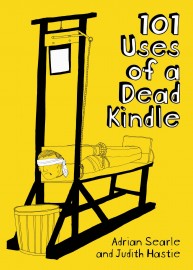
101-uses-of-a-dead-kindle-2_270One of the titles released by Freight Books is 101 Uses of a Dead Kindle, written by Adrian, with illustrations by Judith Hastie. The title is a play on the title of a book released in the late 80s, 101 Uses of a Dead Cat, by Simon Bond. They had high hopes for the title, and a retailer had ordered a large number of copies. Unfortunately, this was a real life example of the sale or return policy followed in the book trade, as almost all the books were sent back by the retailer, with Adrian having seen only one copy in one of their shops.

What happened with 101 Uses of a Dead Kindle has not put Freight Books off publishing humoristic titles, however, with If Dogs Could Swear reuniting Adrian and Judith for a second time. Simple, but effective, and, according to Adrian, if you add a content advisory label on the front it will induce more people to buy the title! Other humour books in the works for Freight Books are Throne of Games and Cyclists: A Spotters Guide.

Adrian also talked about risk, saying that publishing is all about risk, alluding back to the gambling analogy. He said that when you publish a book you want to lower the risk to the reader, making them think at first glance that the book you are selling is worth their time. He also explained some of the ways in which this can be achieved. This ties in with the content advisory on If Dogs Could Swear but he specifically mentioned endorsements by famous people, or quotes by people in general. According to him the fact that someone other than the publisher says a book is good makes the reader more likely to purchase that title. Another thing to use in promoting books is any prize nominations and wins the book has received. Both the quote and the prize nomination will give the book more credibility than the book would have on its own.

Freight Books also publish Gutter, a magazine published twice a year, with short stories and poetry from writers with ties to Scotland. As poetry and short story anthologies are fewer and further between than the people who write them, this is a good place for writers to try to get their work out to readers. Their Scottish point of view underlines Adrian’s contention that “London is the Death Star” (for publishers). He says that anything coming from outside of London is viewed as provincial, and explains that Freight Books is sometimes asked to remove “Scotland” or “Scottish” from their advance sales information.

Adrian Searle is the type of person who gets a lot said in little time, and hearing him speak so enthusiastically about his work, while still cautioning that it is hard work, was interesting and enlightening. The fact that he still says he loves publishing is encouraging, as it shows staying power – even for someone with his diverse background. Freight Press’s achievements in a very short time are impressive, and we can only wait to see what more might come from their small office in Glasgow.


Behind the Digital Scenes at Faber & Faber

October 17th, 2014 by cs48@stir.ac.uk | Posted in Blog | Comments Off on Behind the Digital Scenes at Faber & Faber
Tags: , , , , , ,

FFAs the incredibly honoured 2013 winner of the Faber & Faber prize for Digital Innovation, I travelled down to London for an incredible two-day tour behind the digital scenes at Faber.

I visited three amazing departments with digital publishing at their core: Digital, Faber Factory and Marketing. And what was surprising was how digital was intrinsic to each, and yet, they were completely different.

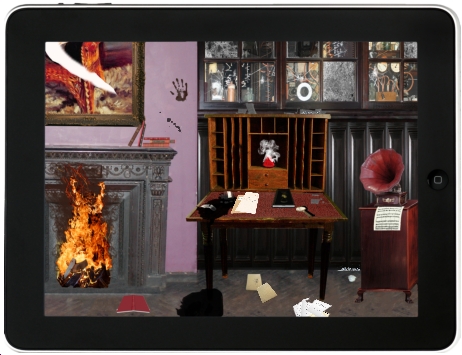
The Digital department made the nerdish inner me very happy. Running through Faber’s app history, from the innovative The Waste Land app through its infamous Malcom Tucker and stunning Shakespeare apps, we arrived at its newest release The Animator’s Survival Kit. Faber took the teaching aid for animation and cartoon drawing by renowned artist Richard Williams and translated it into a digital format as only it could, once again breaking the mould for digital. The Survival Kit uses digital to teach, introducing features that add to the text, such as controllable animation sequences to see frame-by-frame movement, grasping a truth that not many understand: digital cannot simply be a copy of a paper product. The best bit, however, was when I got the chance to give feedback on the digital brief for an upcoming app… very exciting.

Suitably geared up from a morning in apps, I moved on to find out more about Faber Factory and its digital services for publishers. I was a starstruck in a different way, as I’d seen Faber Factory, one of the driving forces in the UK behind digitalisation among the smaller publishers, first-hand in my internship and repeatedly in my digital-focused dissertation. While gains of digital can be immense, the cost is prohibitive for small publishers, and increasingly large players in the market leave little room. And that is where the incredibly enthusiastic Factory team come in, managing, converting, and negotiating on behalf of their clients. I had a great time finding out more on what they did, and left very much convinced that one of the very few publishers offering services is doing it right.

A screenshot from Claire Jeffery’s prize-winning Jekyll & Hyde app

The next day I ventured further up the stairs to find out more about digital marketing. I’ll admit I expected to hear the usual vague buzzwords: ‘social media’, ‘online presence’, ‘SEOs’, etc. So when I actually arrived at the department it was refreshing to discover more about digital marketing beyond social media and videos. I saw how the traditional eclectic Faber was balanced with a new digital approach based on big data. Faber is one of the publishers just beginning to explore big data and it is amazing how much can be revealed. A search for my favourite author Jasper Fforde revealed key phrases, new releases, who was talking about him, which websites they visited… It was incredible and showed the impact that digital innovation is having on marketing. What I appreciated in my visit to marketing in Faber was the shift to a targeted approach based on statistics and information with the same heart and passion underneath, exactly as I’d always thought the process should be.

I saw three different sides to digital in my visit, each different and each needed. But what also really struck me was how, in little under a year through the Publishing Studies course at the University of Stirling, I’d gone from knowing a little about the publishing process to having a in-depth understanding not only of traditional publishing but also of the challenges and opportunities of digital publishing. I found myself debating all sorts of related issues with very passionate people and that was what struck me. To get into publishing you have to be absolutely passionate for what you want do. Every comma in every book, every new innovation, every campaign and every interaction along the chain is driven by people who care deeply about publishing.

On a personal note, there are a couple of things I will take away from this.

(1) Always say yes to a free book.

(2) There is only one way a literary trip to London should end: an Agatha Christie play, a visit to Baker Street and the exploration of many bookshops.

(3) Be completely and utterly passionate in everything you do.

I’d like to thank all the people from the University of Stirling and Faber & Faber who made the trip possible and everyone on the two-day tour who were so welcoming and encouraging.

Claire Jeffery now works at Prepress Projects in Perth.


Little Films – are book trailers a crime against imagination?

October 15th, 2014 by Miriam Owen | Posted in Blog | Comments Off on Little Films – are book trailers a crime against imagination?
Tags: , , , , , , , , , , ,

Recently there seems to be a trend, particularly shared on social media and at book festivals, of authors having book trailers/book videos. What is the purpose of a book trailer? Initially, on the surface it would appear to bring the flavour of a book to the attention of readers but they also promote the author’s name and perhaps highlight the name of the publisher. If a book trailer does this then it may be helping to keep readers active whilst allowing the medium of books a link to the ever growing reliance on video and visual imagery, particularly online and hence helping to keep the medium of books fresh and current. Do they pique your interest when you see them? They have been around for a while but seem to be becoming a bit more main stream now and of course they fit in nicely with the increased use of social media for marketing and promotion. Here is a slick example from 2009 for James Ellroy’s book Blood’s a Rover.

I recently watched one book trailer that actually put me off buying a book I may have otherwise bought. The trailer looked too violent for me. However, I have seen others for books I probably wouldn’t have considered buying but may now pick up if I see them on sale. Author David Hewson’s (The Killing) book trailer for his new work published by Pan Macmillan ‘The House of Dolls’ was shown as part of a presentation he gave at Nordicana in London this year and I am sure will be shown at most of the author’s appearances at book festivals around the world, a pleasing visual treat at the end of a more spoken word based event:

There seems to be quite a lot of variety with the trailers. Some promote the writer more than the book, others have very obvious music and may also promote a song by a particular band in a similar way that car companies have done with TV commercials in recent years. Some are very atmospheric and it is unclear if the trailer is for a film or a book until the very end, others use a large amount of text and the link to a book is fairly obvious. Some feature the author reading. Some mention rave reviews of the actual book similar to what you may see on posters and signs in bookstores such as this one.  Some trailers are quite long and some are brief. Readers may recognise the Scottish location of this trailer.

Then you have this which is a unique collaboration between publishers, authors, artists and record labels.  A song and a book released on the same day. Publishers asked Anton Axélo to write a song to go with a book and he came up with ‘Three hundred and sixty-five.’  The song was inspired by ‘Black Dawn’, the third book in a mystery thriller series of books sold in 27 countries. The books are written by Swedish crime fiction veterans Cilla and Rolf Börjlind.   Cilla and Rolf Börjlind have previously written screenplays for cinema and television of the Martin Beck series by Sjowall & Wahloo and also writing for the Arne Dahl’s A-group series and working on Wallander. In 2004 and 2009 Swedish television showed their crime series The Grave and The Murders, written directly for SVT. These shows were an immediate success with critics as well as with the audience.

Jo Nesbo has quite a few book trailers such as this and this.  You may notice some similarities in style with Nesbo’s book trailers.  In terms of branding and publicity he is a great example in the industry and has great consistency in terms of book covers, publicity material and personal branding giving him a strong presence in the crime fiction genre.  I would love to meet his marketing and PR people one day and discuss their work!

Book trailers can be inserted into websites.  Australian publishers Allen & Unwin use them in their online shop particularly in the kids and young readers sections.  They are used in education particularly to encourage reluctant readers to engage with books and literary promotion projects such as World Book Day use them to appeal to children on their website. Here is a particularly spooky example.

The flip side however is to ask if book trailers remove part of the imaginative process? Do they hint at the desperation of the publishing world to drag itself into the 21st century?  Does using a moving image intertwine comfortably with the written word? Personally I am a fan of a visual image although I have to admit to being the kind of person who likes to read the book before seeing anything at all. Some people need a visual spark to be encouraged in their literary exploration. If trailers encourage people to pick up books then I think they serve their purpose however if they encourage people to bypass the book and wait for the movie then I am not so sure.

Miriam V Owen