Blog

Revised Curriculum for the MLitt in Publishing Studies

April 1st, 2013 by cs48@stir.ac.uk | Posted in Blog | Comments Off on Revised Curriculum for the MLitt in Publishing Studies
Tags: , , , , ,

BEFORE READING THIS POST, PLEASE CHECK THE DATE OF PUBLICATION. (The REAL curriculum is here. At least for now…)


The Stirling Centre for International Publishing and Communication has been at the vanguard of publishing education for over thirty years. It has a forward-thinking approach to publishing studies, and has continually delivered cutting-edge, professionally-oriented degrees which have prepared alumni to work in publishing and publishing-related companies around the world.

The publishing industry is now undergoing an extremely rapid rate of change. Digital technologies have meant that new business models and structures are radically reshaping the industry. As such, we have entirely revised the curriculum for our industry-leading MLitt in Publishing Studies. The new curriculum will be delivered from 2013-14, and we are proud to announce it here.

The revised programme will be structured as follows:

Semester 1

Amazon 1: This compulsory module investigates different market sectors, introduces concepts of publishing business, finance and intellectual property, and analyses current publishing trends and issues. It also explores job roles and publishing processes, equipping students with the skills and knowledge necessary to succeed in an Amazon career.

Amazon 2: This compulsory module examines the processes by which publishing projects (including books, magazines, journals, and digital products) are conceptualised and created at Amazon. It explores the management of authors, intellectual property resources, and editorial workflow, including practical skills of project management and text preparation (copyediting and proofreading).

Amazon 3: This compulsory module introduces marketing theory and practical publishing examples in order to develop a range of strategies for effective promotion of publishing products, through traditional and digital media. The module also explores Amazon’s supply chain, distribution and sales management.

Arts Research Training: This compulsory module enhances students’ employability skills, professional social media, online writing and editing skills, and research methods and research project development. All elements of the module are specifically tailored towards or focused on Amazon.

Semester 2

Amazon 4: This compulsory module enables students to develop skills, understanding and aptitudes for digital (aka Amazon) publishing, its processes and products, including in compiling digital briefs, reviewing and evaluating digital products, management of social media and digital rights, understanding of e-business models and the digital economy, and deployment of analytics, keywords, SEO, metadata and XML.

Amazon 5: This compulsory module enables students to develop management and entrepreneurial skills crucial to publishing. Areas covered include strategic, operational, risk, financial and HR management. It also explores the global business of publishing, including growth strategies, murders and executions, legal tax avoidance, and inventing business models that at first glance make no sense whatsoever.

Internship at Amazon: This compulsory module enables students to undertake a work placement or internship at one of Amazon’s worldwide distribution centres, to incorporate their workplace learning through critical reflection on their and Amazon’s activities and processes.

Publishing, Literature and Society: This optional module explores the interactions between contemporary and historical publishing and society, approaching topics including authorship, readership and the literary marketplace, censorship, wartime publishing, and publishing and diversity (e.g. “not Amazon”). It enables students to develop a critical distance from Amazon.

Publishers’ Lunch (or, The Frankfurt School): This optional module will introduce students to the traditional, or legacy, model of publishing. It involves copious consumption of alcohol, face-to-face meetings and ‘gatekeeping’. Male students are in the majority on this module.

Summer

Dissertation: This is an intensive piece of research on a topic of Amazon’s choice, which is notionally approved by the Programme Director and student. Work extends over both semesters and into the summer.

Given our excellent industry contacts, we are confident that all students will, on successful completion of their programme, be placed at one of Amazon’s many international distribution centres (probably Dunfermline). In the very unlikely event that they are not immediately placed with Amazon or a sub-contracted company, less successful alumni still have ample opportunity to become authors via Amazon’s Kindle Direct programme, or act as highly valued unpaid prosumers in Amazon’s Kindle Directed scheme. Entrepreneurial alumni have the opportunity to develop Amazon-associated businesses and franchises which, should they survive the Kindle Dragon, will be examined by Amazon as acquisition targets.

Ms A. P. Rilfoule, the University’s Amazon Liaison Officer, commented that, ‘We’re very excited about delivering this new programme, which has been developed in close cooperation with our Industry Advisory Borg. Share the bold new future of publishing, writing, reading, and pretty much everything else: with Amazon, with us.’


Publishing Scotland Conference 2013

March 22nd, 2013 by Emily Ferro | Posted in Blog | Comments Off on Publishing Scotland Conference 2013
Tags: , ,

University of Stirling Publishing students with a guest from Edinburgh Napier's Publishing program. Image credit to Publishing Scotland and Sandy Young Photography www.scottishphotographer.com

On March 4, 2013 I attended the Publishing Scotland conference at the COSLA Conference Centre in Edinburgh with some of my classmates. It was an exciting experience to attend a conference with nearly 200 book publishers, booksellers, and other students to discuss some of the pressing matters in the industry. In addition to hearing from keynote speaker John Gordon Sinclair, who entertained the audience with his anecdotes, observing the trends in the market by Bowker, and learning the “20 Irrefutable Theories of Book Cover Design”, two aspects of the conference stuck out as quite memorable to me.

There are a few questions that are circulating in the air that everyone involved in publishing is asking. One of the big ones is where the high street book market is headed. We heard from a panel with representatives from both publishers and booksellers, and there was a unanimous agreement that things are certainly changing. Bob Kelly from Gardner’s Books made the point that bookshops have been changing since the introduction of book sales in supermarkets in the 1960s. He also believes that although there has been constant change, the current change to the bookshops is the largest we’ve seen.

The panel came to a few conclusions about high street bookshops. The first, suggested by Kelly, is that booksellers need to be a cultural hub in the community, and a place where people can come together to learn and share. Along the same lines, Neil Best from Waterstone’s suggests that bookshops need to offer something better than the easy, lazy online experience. David Prescott from Blackwell’s added that there is room for both online shops and high street shops, we just need to give customers a reason to visit and revisit shops.

The most influential comment made during the debate was that there is a disconnect between what people say they want and what they are buying. This is a good way of voicing what the recent sales statistics are showing. I have not personally heard anyone say that they want bookshops to close and for all sales to be made online, and that the suggestion is outrageous, sales still move more and more to online outlets. Even as a publishing student, the ease of use for online book buying is attractive, so it’s not so hard for me to believe that customers without knowledge of the struggling industry buy online without a second thought. There needs to be a more conscious effort to protect what we want, and if what we want is high street bookshops, then that is where we need to shop.

The second aspect of the conference that really struck me was the talk given by Lindsay Mooney from Kobo. I found this particularly interesting because although she was discussing pricing strategies for selling e-books, Mooney was also discussing the interactive advantages available with a Kobo e-reader. While there are benefits to having interactivity with reading apps for tablets, I find that the amount of interactive features available with the kobo may be taking things a step to far. While reading an e-book on the Kobo, any reader can see comments made by other readers and commentary by the author; they can highlight, tweet, and share to their newsfeed exactly where they are in the book, and tell friends whether or not the book is a worthwhile read. While I can see the value in this from a marketing standpoint, isn’t it more valuable to appreciate the book as just a book and not an opportunity to market every sentence? To me, reading should not come with so much noise. Perhaps I am just being traditional and stubborn, but personally if I want to share a book, I will tell my friends about it when I am finished and watch author interviews online in my downtime.

At the very end of the conference, the students at the conference were gathered together and had an opportunity to speak to a panel about any questions we have about the industry and suggestions for finding our way in upon graduation. It was a very useful session at the conference and I am grateful for it. Attending the conference was enlightening as a whole and a wonderful experience. A day well spent.

Creative Internships with the Saltire Society and Freight Books

February 24th, 2013 by cs48@stir.ac.uk | Posted in Blog | Comments Off on Creative Internships with the Saltire Society and Freight Books
Tags:

Creative Internships are currently available with the Saltire Society and Freight Books.

The Saltire Society is seeking a Project Manager for the new Saltire Society Publisher of the Year Award, and Freight Books is seeking a Publishing Intern.

Creative Internships are only available through the Creative Interns programme. Applicants must meet specific eligibility criteria. Application can only be made via your local Jobcentre Plus personal adviser.

Creative Intern vacancies are open to an individual who meet certain criteria. They must:

  • Be aged 24 or younger
  • Hold a SCQF Level 8+ qualification related to the arts or creative industries (equivalent to an HND, first degree, SVQ Level 4 or above)
  • Be unemployed, either claiming benefits but not yet on the Work Programme/Work Choices or not yet claiming benefits, in which case they must make a claim for JSA to receive a referral.

Full details are available via the Creative Interns website (search on Jobs by Sector – ‘Publishing’).

VISITING SPEAKERS FOR SEMESTER 2, 2012-13

February 19th, 2013 by Frances_Sessford | Posted in Blog | Comments Off on VISITING SPEAKERS FOR SEMESTER 2, 2012-13
Tags: , , , , ,

The Centre’s Visiting Speakers programme for this semester presents a broad mix of academic and industry experience. All sessions are held at 2pm in Pathfoot B2. Attendance is free but there is limited space so please register via publishing@stir.ac.uk to book a place.

The series begins on Thursday February 21 with an academic perspective from John Maxwell, lecturer in Publishing at Simon Fraser University in Canada. This is followed on February 28 by Emma House of The Publishers’ Association, the representative body of the UK publishing trade. Two small independent publishers based in Scotland follow: Mark Buckland of Cargo Publishing  in Glasgow (March 7) and Eleanor Collins and Helena Waldron from Floris Books  in Edinburgh (March 14). On March 21, John Seaton, Inventory Manager at Canongate Books will talk about what’s involved in good backlist management, while March 28 hosts Alastair Horne, Social Media and Communities Manager at Cambridge University Press, who will focus on digital publishing.

After the mid-semester break, on April 11 we welcome John Storey, Head of Literature and Publishing at the Gaelic Books Council. Another independent publisher, Vanessa Robertson of Fidra Books will speak on April 18, followed by the final session on April 25 with Timothy Wright, Publisher at Edinburgh University Press.

LSE Review Festival of Books: ‘The Future of Publishing in a Digital Age’

February 17th, 2013 by cs48@stir.ac.uk | Posted in Blog | Comments Off on LSE Review Festival of Books: ‘The Future of Publishing in a Digital Age’
Tags: , , , ,

Our Director, Prof Claire Squires, will be speaking on Saturday 2 March at the LSE Review of Books Space for Thought Literary Festival.

Her panel is entitled ‘The Future of Publishing in a Digital Age’. Other speakers on the panel are author and indie publisher Ben Galley and Oxford University Press’s Damon Zucca. The event will be chaired by Jonathan Derbyshire of the New Statesman.

The talk links to Claire Squires’s AHRC-funded research project, The Book Unbound, which has explored digital publishing.

Tickets for the event are available here.

“Ausgeliefert!“ – Subcontracted Work and Amazon

February 17th, 2013 by Eva Graf | Posted in Blog | Comments Off on “Ausgeliefert!“ – Subcontracted Work and Amazon
Tags: , ,

Eva Graf, currently studying on the MLitt in Publishing Studies, reports on a recent documentary which focused on conditions for staff at Amazon distribution centres in Germany:

The documentary “Ausgeliefert!” (a play on words as “ausgeliefert” has two meanings in German: dispatched and at the mercy of someone/something) kindled a lot of discussion in the German media.

Aired by the television channel ARD, the film by Diana Löbl and Peter Onneken shows how subcontracted workers (immigrant workforce) are being exploited by Amazon and degraded by hired security services.

In the beginning a short sequence depicts a group of happy Spaniards on their way to Germany, presumably to a better future. Nevertheless, the joy does not last very long, a short email sent by Amazon informs the workers that they will not be employed by Amazon directly but a temporary employment agency. Around 5000 workers from all over Europe are hired on a temporary three month contract leading up to Christmas. Instead of the promised 1,500€ they will earn 12% less. Despite this they all sign the contract, written in German, working three months for less than originally promised, as it is better than being unemployed at home. A situation which plays in the hands of Amazon and the agencies, as desperate people are unlikely to complain about a 12% wage cut.

The contract workers are lodged in remote holiday facilities, which are nowhere near the distribution centres. The nearest shopping is also miles away. The commute to work is made by coaches, yet despite being hired by the company there is not enough seating capacity and the coaches are overcrowded on a regular basis. If the coach is not on time for the beginning of a shift the workers have to accept a wage cut. This is a regular occurrence. This is not the only problem that is connected with the long commute and the hired coaches. Most of the time there is only one bus per shift. If there is not enough work and the contract workers are sent home early they have to wait for hours to actually have a chance to return to the remote holiday facilities. No matter if it is cold or snowing, the workers are stuck at the distribution centre. Some try to make the best out of the situation and go to sleep on the canteen tables.

Perhaps sleeping on canteen tables is more relaxing than sleeping in the actual accommodation. Five or more strangers share a small bungalow. The rooms are hardly big enough to store personal things as the double beds take up most of the space. Complaining about the conditions is not tolerated. After Ms. X complained about the living conditions she was kicked out under the pretext that she supposedly had been drying her laundry illegally on the radiators. The security guards followed her to her new shelter and focused the headlights through her window for hours to intimidate and scare her, as well as to undoubtedly demonstrate their power and superior position.

Security in accommodation is provided by a company H.E.S.S., the abbreviation standing for Hensel European Security Services. Despite that abbreviation the name also has a historical association with Rudolf Hess, a henchman of Hitler. The omnipresent security guards radiate the vibe of a paramilitary group, wearing black uniforms, boots and military haircuts. Two guards are even seen wearing Thor Steinar jumpers, a brand connected to the radical right-wing scene and therefore banned in German football stadiums and the Parliament. Ironically Amazon stopped selling Thor Steinar clothes because of this connection in 2009.

Guards search the rooms in absence of the inhabitants, as “this is our house and therefore we make the rules. We are like the police here”. Quotes like this demonstrate the pressure the workers have to live and cope with. Power-hungry guards are not only searching the rooms in absence of the inhabitants, they are also checking bags on a regular basis. The workers are permitted to take away one single roll for breakfast. A breakfast which they pay for.

The documentary shows the dark side of the booming retail giant. To satisfy our Christmas orders promptly underpaid workers have to walk 17km per shift. Temporary employment agencies cart desperate people to the German distribution centres where they work gruelling shifts for little money. It is possible to argue that this is modern slave trade. The winner and benefactor in this system is Amazon, which saves money through the small wages, made through the agencies that hire the workers. There are numerous other players, including travel agencies who book the accommodation (“I don’t count in humans, I count in buses.”), the owners of the holiday facilities (“I can place seven in one bungalow, that means you can save some money and I can accommodate more”, or “Of course I’ll take Polish workers, they are not as dirty and drunk like others”), and of course the seedy security company.

How can Amazon not know what happens with the contract workers? During the filming the company refused to answer any queries made by the crew. Following the controversy after the documentary was aired in Germany, Amazon promised to look into incidents and said they were most likely isolated cases. The response to the documentary in the rest of Europe has not been as shocked, with this article in The Indendent newspaper being one of very few media responses to the incident in the UK. Even if the occurrences were isolated, cases like this cause a bad aftertaste which stays.

Merit Scholarships to study publishing at Stirling

February 16th, 2013 by cs48@stir.ac.uk | Posted in Blog | Comments Off on Merit Scholarships to study publishing at Stirling
Tags: ,

The University of Stirling is offering Merit Scholarships of £2000 to Home/EU students who have graduated with a first-class honours degree for postgraduate study in 2013-14.

Full details of the scheme are available here. To apply for a place on the MLitt in Publishing Studies at the Stirling Centre for International Publishing and Communication, please apply for a place on the programme.

Details of other scholarships for Home/EU students are available here (AHRC) and for students from developing C0mmonwealth countries here (Commonwealth Shared Scholarship Scheme).


Commonwealth Shared Scholarships for study at Stirling

February 16th, 2013 by cs48@stir.ac.uk | Posted in Blog | Comments Off on Commonwealth Shared Scholarships for study at Stirling
Tags: , ,

The University of Stirling is inviting applications from students for the Commonwealth Shared Scholarship Scheme.

The University is offering three scholarships, and Publishing is one of the areas in which applications are being accepted. If you are from a Commonwealth country and wish to be considered for a scholarship to study for the MLitt in Publishing Studies at the Stirling Centre for International Publishing and Communication, please apply for a place on the programme and indicate in your personal statement that you wish to be considered for a scholarship.

The deadline for initial applications is 30 March 2013. For further details of the scheme and eligibility, please see the Commonwealth Scholarship Commission website.

Iceland – country of fire, ice, and books.

January 28th, 2013 by Kristin Funk | Posted in Blog | Comments Off on Iceland – country of fire, ice, and books.
Tags: , , , ,

Not only does Iceland have the most stunning landscape, its literary culture is truly fascinating as well. Kristján Jónasson, head of the Association of Icelandic Book Publishers, once said “Iceland is an island far up North, it is hard to get away – except through reading and writing”. Literature seems to indeed be a passion on the island in the North Atlantic. 93 percent of the population read at least one book a year, 40 percent read more than five. Even though only 340,000 people live in the European country, approximately 2.5 million books are sold annually. In recent years, Iceland has been struggling with a severe financial crisis. However, book sales have not suffered.

Crime novels, especially those of Icelandic and Scandinavian authors, are among the favourites of Icelandic readers. The Christmas season is the most beneficial time for book sales. Giving books as a Christmas present has been a tradition in Iceland since the 1950s when import articles were rare. Today, nearly every Icelander will find a book under the tree come Christmas Eve.

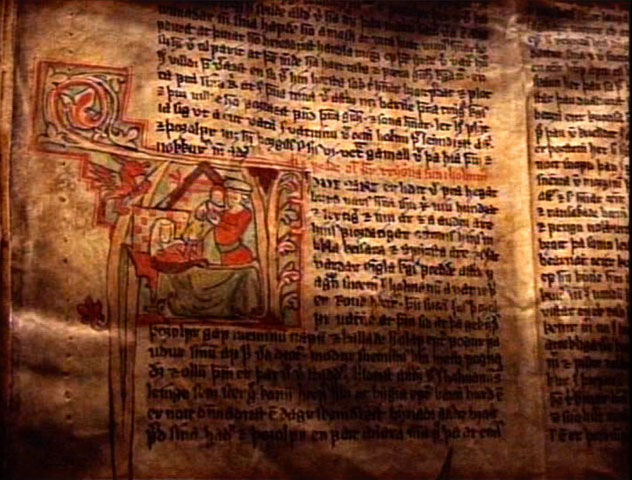
The most famous Icelandic literature are the over 600 years old Sagas of Icelanders. Written in the 13th and 14th century, the sagas tell stories of survival, honour and love. To this day, the authors of the sagas, and how much the stories represent the truth, remain a mystery. The sagas are part of the UNESCO’s Memory of the World Programme, and they are still a presence in the mind of Icelandic people. One can find the names of the saga heroes in product names, and some of the old saga phrases are still being used in today’s Icelandic language.

The Nobel laureate in literature, Halldór Laxness has a very special place among the Icelandic citizens. The house that he resided in until his death in 1998 is a museum now, and a very popular destination for excursions. Another greatly interesting museum is the Þórbergur Center. Its exhibition is dedicated to the author Þórbergur Þórðarson (1888–1974). One side of the building is shaped as a row of two-metre-high book spines – making it a piece of striking architecture.

No other country on earth has as many authors as Iceland percentage-wise. The rise of the internet encouraged the Icelandic passion for writing even further – nearly every Icelander has their own blog today. In times of great uncertainty in many other parts of the world, Iceland seems to be an example of a great literary culture that cannot be disturbed by technology or economical difficulties.

– Kristin Funk

Paula Morris Lecture – How the Novelist Sees the World…

January 23rd, 2013 by tsarchdeacon | Posted in Blog | Comments Off on Paula Morris Lecture – How the Novelist Sees the World…
Tags: , , , , , ,

… With great big sweeping Venn diagrams to connect the myriad of people and organisations that contribute to the life-cycle of a novel. With detailed characterisations and in-depth analyses of the interplay between each Venn bubble, with a structured flow and a bit of conflict to keep it all moving nicely along. Novelists see the world (of publishing) as a fascinating place that might be much akin to the worlds of their books.

There are four kinds of people in the world, none of whom a novelist is particularly enamoured with:

  • Gatekeepers. Agents, publishers, booksellers, the media, festivals, and prizes.
  • Rivals. Other writers. (Note: ‘rivals’ and ‘friends’ are by no means mutually exclusive. Or so they would have us believe.)
  • Necessary Evils. The public, online reviewers, book clubs, festival audiences, etc.
  • Enemies. Yourself. Money. The world at large.

And yet novelists have far more to worry about than these frustrating gnats that surround them. Worries such as publicity, for one, which is an increasingly important aspect of the novelist’s life. It is no longer an isolated art; writers need to be actively engaged with the world through social media and self-promotion. They’re constantly bombarded with people asking questions or favours. They get e-mails by the giga-load.

Then there’s the insecurity. Writers are a ‘whirlwind of insecurity’. Will their next book be their last? Will it be a failure? It’s a life of unstable income and of second jobs – fixing, ghost writing, journalism, anything to keep writing.

It takes a hell of a lot more than talent to get published. It takes persistence and discipline, luck, ego (a.k.a. ‘drive’) and often a very thick skin. It takes a healthy aversion to reading too many reviews and the ability to ignore the call of the market (or risk becoming a hack). A good pen and a few nice turns isn’t enough anymore.

So all this begs the question… why? Why would anyone choose to take on such a career?

‘It’s not a career, it’s a vocation’, Morris said, ‘you should be doing it because you would be miserable doing anything else’.

See more from Paula Morris at her website.

-Talis S Archdeacon